
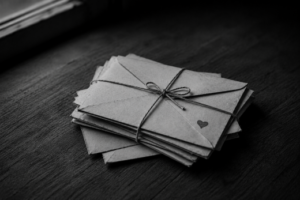
When We First Learned Each Other’s Names
She met him in a place that demanded nothing from either of them.
A waiting room.
Not the dramatic kind—no urgency, no whispered prayers—but one that smelled faintly of disinfectant and old paper. The ceiling fan rotated lazily, stirring the afternoon heat without really easing it. People came and went with files tucked under their arms, purpose written clearly on their faces.
She was there because she had time. He was there because he had too much of it. She noticed him only because he looked up when she dropped her pen.
It rolled across the tiled floor and stopped near his shoe. He bent down, picked it up, and held it out to her with a small, apologetic smile, as though returning it were an imposition.
“Yours,” he said. “Yes,” she replied, and then added, unnecessarily, “Thank you.”
Their fingers did not touch. But something paused between them anyway.
She sat back down, aware—oddly—of her own breathing. The pen felt warmer now, as though it had been holding his attention for a moment longer than required.
He returned to his newspaper. She to the book she hadn’t been reading.
Minutes passed. Then more.
Eventually, he folded the newspaper neatly, creasing it with care, and spoke again—not to her exactly, but into the space they now seemed to share.
“They’re always late after lunch.” She looked up. “Who?”
“Everyone,” he said, smiling again. “Doctors. Trains. Decisions.”
She laughed. It surprised her—how easily it came. How natural it felt to respond.
“I suppose lunch makes us slow,” she said. “Or thoughtful,” he replied.
That was when she looked at him properly.
He was not handsome in a way that demanded attention. His hair was already surrendering at the temples, his shirt crisply ironed but plainly chosen. Yet his eyes held a quiet alertness, the kind that suggested he noticed things but did not always speak of them.
They fell into conversation the way people do when there is nothing urgent pulling them apart.
Where she worked. Where he had once worked. Why both of them were there on a Tuesday afternoon when most of the world seemed busy being elsewhere.
There were pauses, but they were comfortable ones. Neither felt compelled to fill the silence with importance.
“What are you reading?” he asked, gesturing toward her book. She turned it so he could see the cover. “A collection of short stories. I like endings I don’t have to commit to.”
He nodded. “I prefer beginnings. They’re full of promise. Endings ask too much of us.”
She smiled at that. “You sound like someone who writes.” “I write letters,” he said. Then, after a beat, “Or I used to.”
“To whom?” He hesitated. Just briefly. Long enough for her to notice.
“People who never asked me to,” he said lightly. “Friends. Family. Sometimes myself.”
“That’s brave,” she said. “No,” he corrected gently. “It’s safer than speaking.”
That stayed with her.
When her name was called, she stood, gathering her bag and papers. She hesitated, then turned back.
“I’m—” she began, then stopped, amused by her own uncertainty. “I didn’t catch your name.”
He stood too. “I was hoping you’d ask. ”He told her his name. She told him hers.
Saying it aloud in front of him felt oddly significant, as though she were placing something fragile into his keeping.
“Well,” he said, “I hope the doctor is kind.” “And I hope,” she replied, surprising herself again, “that you keep writing letters.”
He smiled, softer this time. “I will. Now that someone knows I do.”
They did not exchange numbers. They did not promise to meet again. They simply walked away in opposite directions, carrying the moment with them like an unspoken understanding.
She thought of him later that evening while making tea. The kettle boiled too loudly. The cup was chipped at the rim. Everything felt ordinary—except for the quiet sense that something had begun without asking permission.
Three days later, a letter arrived.
The envelope was cream-coloured. Her name was written carefully, as though the writer had practiced it first. There was no return address.
She held it for a long time before opening the cupboard and slipping it inside, unopened, between old files and forgotten receipts.
She told herself she would read it later.
She did not yet know how many times that thought would repeat itself over a lifetime.
The First Letter
The letter arrived on a Thursday.
She remembered the day clearly—not because it was important, but because nothing else about it was. The kind of day that slips through life unnoticed, leaving no imprint except for what interrupts it.
The postman rang the bell once and left the envelope on the small table near the door. She picked it up absent-mindedly, glancing first at the electricity bill tucked beneath it, then at the unfamiliar handwriting above her name.
She stood still. The envelope was heavier than she expected. Thick paper. Chosen, not accidental. Her name was written slowly, deliberately, as though each letter mattered.
She knew immediately who it was from. That certainty unsettled her.
She carried it into the living room and placed it on the centre table, as though distance might soften its presence. She made tea. The kettle screamed longer than necessary. She poured the tea and forgot to add sugar.
She sat down opposite the letter. It lay there quietly. Patient. Not demanding to be opened. That, somehow, made it harder.
She thought of him in the waiting room—how he had spoken of letters as though they were old companions. How his voice had softened when he admitted he wrote them. How he had said they were safer than speaking.
She wondered what he could possibly have to say to her.
They had met once. Spoken for less than an hour. Exchanged nothing but names and impressions. That should have made the letter harmless. Instead, it felt intimate in a way she could not explain.
She picked it up, turned it over, traced the edge with her thumb. The flap was sealed neatly. Not rushed. Not careless. She imagined opening it.
Imagined his words stepping into her quiet home, rearranging the furniture of her thoughts, settling into corners she had kept empty on purpose. She had not meant to live cautiously. Life had simply shaped her that way—slowly, without asking.
She placed the letter back down. “I’ll read it later,” she said aloud, as though the room needed reassurance.
Later became after dinner. After dinner became tomorrow. Tomorrow became a week.
The letter moved from the centre table to the cupboard near the window, slipped between old files that no longer mattered. Each time she opened the cupboard, she saw the corner of the envelope, pale against yellowing papers.
Each time, she closed the door again.
She told herself she was busy. She told herself it wasn’t urgent. She told herself that some things, once opened, could not be neatly folded back into place. What she did not tell herself was that she was afraid.
He wrote the letter on a Sunday morning.
He had rewritten the first line three times before settling on the fourth. Each discarded version lay torn beside him, confessions too eager, too guarded, too clever. He did not want to impress her. He wanted to be understood. He chose his words carefully, knowing they would travel alone, without his voice to soften them or his smile to undo their weight.
My dear friend,
I hope it is not strange to receive a letter from someone you met only once. If it is, I apologise. But I have always believed that some conversations begin late only because they were meant to be written, not spoken. I have been thinking about our meeting—not because it was extraordinary, but because it was simple. You listened. You laughed easily. You did not rush to fill the silences. That is rarer than it should be. I wanted to tell you something I did not say that afternoon. I write letters because they allow honesty to arrive without interruption. No raised eyebrows. No polite exits. Just words, waiting to be received when the reader is ready.
If you choose not to read this beyond these lines, I will understand. If you do, I hope you will write back. Not because you owe me anything, but because I would like to know you a little more—at your pace, in your time. Warmly,
He did not sign his name. He wanted her to remember it without ink.
The days passed.
She attended dinners. She answered calls. She smiled at the right moments. Life continued in its predictable rhythm, and she let it, grateful for the familiarity. Yet, sometimes, while stirring curry or folding laundry, she thought of the unopened letter.
It waited. Not accusing. Not pleading. Just present.
She told herself silence was a choice. She did not yet realise it was also an answer.
When Letters Became A Habit
The second letter arrived before she had forgotten the first.
It came a fortnight later, slipped under the door with the morning newspaper, indistinguishable at first glance from everything else that demanded her attention. She noticed it only because she was not expecting it—and because she was.
Same cream-coloured envelope. Same careful handwriting. Her name, once again, written as though it mattered.
This time, she did not take it to the living room. She carried it straight to the cupboard.
The first letter lay exactly where she had left it, edges still crisp, its presence oddly reassuring. She placed the second beside it, aligning the corners neatly, as though order could substitute for response.
Two unread letters.
She closed the cupboard door and leaned against it, exhaling slowly. She did not tell herself she would read them later this time. She simply did not open them.
He waited longer for her reply than he had expected to.
Not because he was impatient, but because he had felt—quietly, confidently—that she would understand what he was offering. Not romance. Not expectation. Just a conversation unburdened by immediacy.
When no reply came, he told himself she was busy. When another week passed, he told himself letters were, after all, safer for the writer than the receiver.
Still, he wrote again.
The third letter was shorter. Less careful. More human.
He wrote about the weather turning unexpectedly cool. About a book he had finished and wished she might read someday. About how the waiting room had not felt the same since that afternoon.
He asked nothing.
That, he believed, was the kindest way to write.
By the time the fourth letter arrived, she had developed a routine.
She would recognise the envelope immediately. Her pulse would quicken—not with excitement, but with something closer to anticipation restrained by caution. She would set it aside, finish whatever task she was in the middle of, and then place it carefully with the others.
The stack grew slowly. She dusted around it. Adjusted its position. Ensured it did not crease or curl.
She treated the letters with more care than she treated the idea of answering them. Sometimes, late at night, she stood in front of the cupboard, her hand resting on the handle. She imagined opening just one.
Not the first—firsts carried too much weight. Perhaps the second. Or the third. Something already in motion.
But imagination, she discovered, could be as consuming as action. She would turn away instead.
The letters began to change. Not in tone—his remained gentle, observant, unassuming—but in depth. He wrote as though she were already listening.
He told her about his mother’s habit of rewriting grocery lists. About the job he had left because it had begun to feel dishonest. About the way he preferred walking to driving, simply to notice the world at eye level.
He never asked why she had not replied. That silence, more than anything, made her uneasy.
If he had demanded something—an explanation, a word, even a refusal—she might have responded out of obligation. But he did not. He trusted the letters to find their place, even if that place was unopened.
What she did not know was that her silence was not received as indifference. It was received as consideration.
He assumed she was reading them slowly, thoughtfully, choosing her words with the same care he chose his.
He imagined her folding the letters back into their envelopes, carrying pieces of him through her days.
The possibility comforted him. Misunderstandings often do. The habit settled in.
He wrote every few weeks. She received every letter. Nothing was exchanged, yet something continued. Her life began to organise itself around the arrival of envelopes she pretended did not matter.
She delayed outings on days she sensed the postman might come. She checked the cupboard more often than necessary. She caught herself rehearsing replies she never wrote. She told herself she was protecting her peace. But peace, she was learning, could be another form of avoidance.
One evening, a friend asked casually, “Have you ever thought about the life you didn’t choose?”
The question lingered long after the conversation ended. That night, she opened the cupboard again and counted the letters. Seven. She rested her forehead against the door, eyes closed, and felt something inside her shift—not forward, not back, but deeper. For the first time, she wondered not what the letters contained, but what they were slowly building.
Silence, Mistaken For Grace
The eighth letter arrived on a morning she was already tired of herself. Not tired in the way sleep could fix, but in the deeper way—of repeating the same careful choices until they no longer felt careful, only small. She recognised the envelope instantly.
It waited on the dining table while she finished her tea, the steam rising and disappearing as if practising disappearance. She did not touch it at first. She watched it, as one might watch a thought they were not yet ready to have.
When she finally picked it up, she noticed something different. Her name was written more slowly this time. Not uncertain. Just deliberate. As though he had paused between letters.
She carried it to the bedroom. The cupboard door opened with a soft complaint. The stack of letters leaned slightly now, no longer perfectly aligned. She straightened them out of habit—and then stopped.
Her fingers rested on the top envelope. She did not open it. But she did not put it away either.
She sat on the edge of the bed, the letter in her lap, and for the first time allowed herself to imagine what he must think of her.
Not cruel. Not dismissive. Just… quiet.
A woman who listened carefully, perhaps too carefully. A woman who read slowly, choosing when to respond. Graceful silence. The thought soothed her, even as it unsettled her.
He wrote the eighth letter knowing it might be the last. Not because he had decided to stop, but because something in him had begun to tire—not of writing, but of hoping. Hope, he had learned, required participation.
Still, he wrote.
Dear You,
I am writing today without knowing whether you read these letters or simply keep them. I realise that not every silence asks to be broken, and not every absence is a refusal. Sometimes it is simply a pause.
I want you to know that I do not write to ask for anything. I write because I enjoy the honesty of putting words down, and because, for reasons I cannot quite explain, I trust you with them—even if you never read them.
If you choose not to respond, please do not feel you must explain yourself. But if you ever do wish to speak—to write, even a single line—I will be here, grateful for it.
Warmly,
—
She read the letter only in her head.Not the words themselves—but the intention behind them.He was giving her an exit that did not bruise his dignity. A kindness that asked nothing in return.That frightened her more than urgency ever could.Because it meant the silence was now shared, even if unevenly.
She folded the letter carefully and placed it back with the others.She told herself she would write soon.She did not.Time moved forward in ways that felt personal.
She grew older into herself. Responsibilities multiplied. Decisions hardened. Life filled the spaces she had once left open on purpose.
The letters kept coming, but less frequently now.Every few months instead of weeks.Shorter. Softer.
He wrote of ordinary things. A street he liked. A neighbour who waved every morning. A memory that had surfaced unexpectedly.Never reproachful.Never demanding.His restraint became a kind of presence.And her silence—mistaken for grace—became habit.
There were moments when she almost broke it.
A wedding where she felt like a guest in her own life.A hospital corridor that smelled like waiting rooms everywhere.A night when the power went out and the darkness felt too complete.
She would think of him then. Of the letters. Of the voice she remembered only in fragments.Her hand would hover over the cupboard handle.And then she would turn away, telling herself that some connections belonged to who we were, not who we had become.
Years later, when she finally counted them again, there were seventeen letters.She had aged into a woman who understood regret not as pain, but as weight.The cupboard was older. The paper inside it had softened.
She sat on the bed and untied the faded blue ribbon.For the first time, she opened a letter.Not the first. The last.
The Last Letter
She chose the last letter because it felt safer.Beginnings demanded courage. Endings, she believed, required only acceptance.The envelope was thinner than the others. The paper had yellowed slightly, its edges no longer sharp. Her name was written the same way—but there was a tiredness to the ink, as though the pen had paused more often than usual. She sat by the window, morning light falling gently across the bed. Outside, the world went about its business, unaware that a life was about to shift inside a quiet room.Her fingers hesitated at the flap.Then, finally, she opened it.The paper inside was folded once, not twice. There was less to say now.
Dear You,
This will be my last letter. Not because you did not respond, but because I have finally understood what your silence has been trying to tell me. I do not think you meant to be unkind. Some people are simply careful with their hearts, and some doors remain closed not out of rejection, but out of self-preservation. I respect that.
I want you to know that writing to you has been one of the gentlest parts of my life. You gave me a place to put my thoughts, even if you never read them. For that, I am grateful. I am stepping into a different chapter now. I wish you a life that feels chosen, not endured.
Take care, always.
She read the letter twice.Then a third time, slower.There was no anger in it. No accusation. Just a dignity that made her throat tighten.She had expected closure to feel like relief.Instead, it felt like arrival—too late to matter, yet too heavy to ignore. She folded the letter and placed it on the bed beside her.For the first time, the room felt crowded with all that had not been said.She reached for another letter.This time, she did not hesitate. The second-last envelope resisted slightly as she opened it, the paper stiff from years of waiting.
Dear You,
Sometimes I wonder if we are living parallel lives—close enough to sense one another, distant enough never to meet again. I imagine you reading this at a kitchen table, or perhaps in bed at night, the day already behind you.If you ever feel the urge to respond and stop yourself, please know that even restraint is a form of communication. I am listening either way.
Her breath caught.She had been listening too.Just not aloud.
One by one, she began to open the letters.Not in order.Some were long. Some brief. Some hopeful in ways that now felt unbearably tender. He had written through seasons of change—through illness, through uncertainty, through quiet joys he had wanted to share.He had written as though she were already part of his life. She had been.Just invisibly.By the time she reached the first letter, the light outside had shifted. Evening crept into the room, softening the edges of things. Her eyes burned, not with tears, but with recognition.
She unfolded the first letter last.
My dear friend,
I do not know where this will lead. I only know that some meetings arrive without warning and leave without permission. I would like to know you—slowly, honestly, without expectation. If this letter feels like too much, you may forget it ever came. But if it does not, perhaps you will write back.
She pressed the paper to her chest.For the first time in years, she did not turn away from what she felt.She sat there until the room darkened, surrounded by words that had waited faithfully for her to arrive.And then, at last, she did something she had not allowed herself to do before.She took out a blank sheet of paper.
Why She Never Wrote Back
She sat at the table with the blank sheet of paper in front of her long after the house had fallen into its night-time stillness.The pen lay beside her hand, obedient and patient. It did not judge. It did not hurry her. It waited in a way she was no longer accustomed to.She realised, with a strange clarity, that she had always known how to write back.
What she had never known was how to begin.Not with words—but with permission.She had learned early that wanting too much invited disappointment.Her life had been shaped by small, sensible decisions that added up to something respectable. A marriage chosen carefully. A home built on routine. A life that worked, if not always gently.
Love, as she understood it, was something to be managed.And then there had been him—arriving without context, without expectation, offering nothing but words written honestly and sent without urgency. He had unsettled her not because he asked for too much, but because he asked for so little.She feared that if she replied—even once—she would have to answer questions she had learned to avoid.
What do you want?What have you settled for?What have you postponed long enough to mistake for peace? So she told herself stories.
She told herself it was kinder not to respond at all than to respond uncertainly.She told herself that silence spared them both embarrassment.She told herself that some connections were meant to remain untouched, like heirlooms too delicate for daily use.Each reason felt reasonable.Together, they became a wall.
There had been moments—brief, treacherous moments—when she almost broke it.
Once, after an argument that left her feeling smaller than she remembered being, she had taken out a letter and read a single paragraph aloud, just to hear what honesty sounded like.Another time, when illness brushed past her life and retreated, she had wanted to tell him that mortality made cowards of us all.But each time, she imagined the consequences of being seen too clearly.
And she chose safety.What she had not understood then was that silence does not preserve a moment.It alters it.Over time, her silence became something else entirely. To him, it was grace.To her, it was avoidance.Between them, it became misunderstanding.
She had believed she was keeping a door closed gently.She had not realised he was standing on the other side, reading the quiet as a decision.The pen rolled slightly under her fingers. She picked it up.The paper remained blank.She closed her eyes and tried to imagine what she would say if she were allowed to speak without consequence.I was afraid.I was careful.I did not know how to want you without unravelling my life.
The words felt honest.They also felt late. She looked again at the letters spread across the table.He had given her time.Years of it.She had mistaken that gift for infinity.
The truth settled slowly, without drama: she had not written back because writing back would have required courage at a time when she had been busy surviving.Survival, she had learned too late, was not the same as living.She bent over the blank page at last.
The first sentence did not come easily.But it came.
Dear—She stopped.Names mattered.And so did timing.She set the pen down again, her chest tight not with regret now, but with resolve.Whatever she wrote next would not be an apology shaped like an excuse.It would be the truth.Even if it arrived too late to change anything.
The Life He Lived Without Her
After the last letter, he did not stop writing.He simply stopped addressing the letters to her. For a while, the habit lingered. He would sit at his desk in the early mornings, pen poised, the page waiting, and feel the familiar urge to speak into the quiet. Old instincts do not disappear easily; they soften, adapt, find other vessels.He began writing to no one in particular.
To days that had passed.To questions he no longer expected answered.To himself, most often.He folded these letters too, though they remained in a drawer instead of being sent. It amused him, faintly, that some habits survived disappointment.Life rearranged itself around his decision to let go. Not dramatically.Not all at once.
He took a different route on his evening walks, one that did not pass the post box he had once favoured. He changed his routine enough to convince himself he was moving forward.People came into his life as people always do—through work, through friends, through moments of shared convenience.
There was a woman he met at a bookshop, someone kind and attentive, with laughter that filled silences easily. They spoke often, met for coffee, shared fragments of their histories.He tried. But there was a part of him that had learned a different rhythm—one shaped by listening, by offering words without interruption. Spoken conversations felt hurried now, crowded with reactions.He did not blame anyone for that.
He understood, finally, that the letters had not been about her alone. They had been about who he was when he wrote them.Years passed.
His hair greyed. His hands grew steadier, then less so. He moved houses once, downsized carefully, carrying only what felt necessary.He did not keep copies of the letters he had sent her.Not because he wanted to forget—but because he had trusted the act of writing itself to be enough.
Sometimes, late at night, he wondered if she had ever opened even one.He hoped she had.Not for his sake. For hers.
The day he fell ill came without warning.It was not the kind of illness that announced itself loudly. It arrived disguised as fatigue, as small forgetfulness, as days that required more rest than before.Doctors used words like manageable and monitoring. He listened politely.He had always been good at listening.
During his recovery, his sister found the drawer.She had come to stay with him for a few weeks, insisting with a firmness he did not argue against. While tidying, she discovered a stack of unsent letters, bound loosely with string.She did not read them.
She brought them to him instead.“You still write,” she said, not accusing, just observing.“Yes,” he replied. “Do you send them?”He smiled. “Not anymore.”She hesitated. “There was someone once, wasn’t there?”
He nodded.“She never wrote back?”“No,” he said, gently. “But she listened, in her own way.”
His sister did not ask how he knew that. Some understandings do not require explanation.
On a quiet afternoon, as sunlight filtered through half-drawn curtains, he found himself thinking of her again—not with longing, but with something closer to gratitude.
She had taught him how to speak honestly.Even if she had never spoken back.That, he realised, was not nothing.He placed the unsent letters back into the drawer and closed it carefully.There were things he still wanted to say.
But they no longer needed a destination.
The Question of Finding Him
The decision did not arrive all at once. It surfaced in fragments—while brushing her hair, while watching steam rise from a cup of tea, while standing at a pedestrian crossing as the light refused to change. It was not urgency that moved her, but something quieter and more insistent.
The thought was simple.Is he still alive?The question startled her with its bluntness. Until now, he had existed for her in ink and paper, suspended in time. Age had touched her face; life had rearranged itself. But in her mind, he remained exactly as he had been in that waiting room—observant, unhurried, present.
She realised how fragile that image was.Time, she knew now, did not preserve.It altered. She began cautiously.Not by asking directly, but by tracing the edges of the life he had once mentioned. A bookshop he liked. A street he walked often. A former workplace he had written about in passing.
The city had changed.Places closed. Roads widened. Familiar names disappeared behind new signage. She felt foolish at first, as though chasing a version of the past that no longer recognised her. And yet, the letters had been written into a real world.That world, altered though it was, still existed.
One afternoon, she found herself standing outside the bookshop he had once described—smaller than she had imagined, its windows crowded with handwritten recommendations.
She hesitated before stepping inside.It was strange how easily courage faltered at thresholds. Inside, the air smelled of paper and dust. A bell rang softly as she entered, announcing her presence in a way that felt undeserved.She did not ask for him.She browsed instead, running her fingers along spines, allowing memory to guide her.
When she reached the counter, the man behind it looked up and smiled politely.“Can I help you find something?”She swallowed. “I’m looking for someone. He used to come here often. Some years ago.” The man’s smile softened into recognition.“You’ll have to be more specific,” he said gently. “People pass through. Some stay longer than others.”She nodded, embarrassed. “He wrote letters,” she said, and immediately knew how inadequate that sounded.
The man considered this.“There was a gentleman,” he said slowly. “Came in every Sunday morning. Bought one book, always paid in cash. Very particular about paper.” Her heart began to beat faster.“Does he still come?” she asked.The man shook his head. “Not for a long time.”
The words settled heavily between them.She walked out into the afternoon light feeling unmoored. Not for a long time.That could mean anything.Everything.
She sat on a nearby bench and closed her eyes, allowing disappointment to rise and pass without resistance. She had known this might happen. Had prepared herself for it. Still, the absence felt personal.Later that week, a chance mention did what deliberate searching had not.
At a small gathering, someone spoke of a man who taught a weekend writing class at a community centre years ago. Quiet. Thoughtful. Known for encouraging people to write letters they never intended to send.
Her breath caught.She asked questions carefully, afraid of revealing too much hope. Yes, the man was older now.Yes, he had stopped teaching after an illness.Yes, his sister still lived nearby. She was given a name.And an address.She stood outside the building longer than necessary. The envelope she had written—finally written—rested in her bag, its weight undeniable.She had addressed it simply.His name.Nothing more.
She did not know if she would ring the bell.She did not know if he would recognise her handwriting.She knew only that some questions, once asked, refused to remain unanswered.She stepped forward.
When the Past Answered The Door
The door took longer to open than she expected.She heard movement inside first—slow, deliberate footsteps, the faint scrape of something being set aside. Her hand tightened around the strap of her bag, her pulse loud enough to make her wonder if he could hear it through the door.
She almost turned away.Then the door opened.It was not him. A woman stood there instead—older, sharp-eyed, with a face shaped by concern and patience. She looked at her openly, assessing without intrusion. “Yes?” the woman asked.“I’m—” She stopped, suddenly unsure of everything she had rehearsed. “I’m looking for—” She said his name, softly.
The woman’s expression changed. Not to suspicion. To recognition.“You must be the one,” she said, not unkindly. The words landed with unexpected weight.“The one?” she repeated.The woman stepped aside. “Come in.”
The house smelled of books and something warm—soup, perhaps, or memory. It was quieter than she had imagined, but not empty. Lived-in. Considered.“He’s resting,” the woman said as she led her inside. “He’s better than he was, but mornings tire him.” “I can come back,” she said quickly.The woman shook her head. “No. He’ll want to see you.”
Want.
The word undid her more than anything else.They stopped near a small sitting room. Through the open doorway, she could see him.He was thinner. His hair almost entirely grey now. But the way he sat—slightly forward, attentive even in rest—was unmistakable. He looked up.For a moment, nothing moved.Then his eyes widened—not dramatically, not with disbelief—but with recognition so immediate it startled her.
She realised, with a sudden clarity, that he had never forgotten her face.He stood slowly, steadying himself on the arm of the chair. “You came,” he said.Not a question. She nodded. Words gathered in her throat and refused to organise themselves. “Yes,” she managed. “I came.”
They sat opposite each other, separated by a small table that felt absurdly insufficient to hold all that lay between them. His sister excused herself quietly, leaving them alone without ceremony.“I wasn’t sure,” he said after a moment, “if you ever would.”“I wasn’t sure either,” she replied. They smiled—tentatively, imperfectly.She noticed his hands first. They were the same hands that had written to her all those years ago. Steady still, though marked by time.
“I read them,” she said suddenly. “All of them.”He did not look surprised.“Did you?” he asked gently. “Yes. Recently.”“That’s enough,” he said. “I always hoped you would, someday.”“I’m sorry,” she said then. Not as apology shaped like excuse. Just truth.
He shook his head. “Don’t be. We each arrive when we can.”She felt tears rise, uninvited. “I wrote you back,” she said, reaching into her bag. “It took me a long time.”He looked at the envelope in her hand as though it might vanish if he stared too hard.
“You didn’t have to,” he said.“I know,” she replied. “But I wanted to.” He took it carefully, reverently, and placed it on the table between them. “May I read it later?” he asked.She nodded. “Take your time.”
He smiled at that—truly smiled—and something in the room seemed to soften. They spoke then. Slowly. Gently. Filling gaps not with explanations, but with presence. They spoke of years passed, of small joys, of lives that had unfolded without each other yet remained strangely aligned.When silence returned, it no longer felt like absence.It felt shared.
As she stood to leave, unsure of what came next, he said, “I’m glad you came.”“So am I,” she replied. Neither pretended this was an ending.Some meetings arrive late.But not without meaning.
The Conversation That Never Fit On Paper
She did not leave right away.Neither of them suggested it, but the moment lingered, unwilling to be folded neatly into goodbye. He watched her hesitate, recognising the impulse; it was one he had once honoured from afar.
“Would you like some tea?” he asked.“Yes,” she said, relieved by the ordinariness of the offer.
He moved carefully into the kitchen, insisting on doing it himself. She followed, standing at the doorway, observing the small rituals of his life—the chipped cups, the kettle that took too long to boil, the quiet patience with which he waited for it.It felt familiar in a way that startled her.They sat at the table, steam rising between them like a fragile truce.
“I used to imagine this,” he said, not looking at her. “Not the tea. The conversation.”She smiled softly. “So did I.” He turned to her then. “I wondered what I would say if you ever answered.”“And?” she asked. “I realised,” he said, “that I would probably listen instead.”She laughed, a sound that carried both regret and relief.
“I didn’t write back because I was afraid,” she said. The truth, spoken aloud, felt heavier than it had on paper. “Not of you. Of what replying would change.”He nodded slowly. “I suspected something like that.”
“You did?”“Yes. Silence has its own language. I just didn’t know which dialect yours spoke.” She looked down at her hands. “I thought I was being careful. I didn’t realise I was being absent.”
“You were present,” he said gently. “Just not in the way I expected.”They sat with that.
Then he added, “I wasn’t waiting all those years, you know.”“I know,” she said quickly. “I didn’t imagine you were.”“But,” he continued, “there was a part of me that stayed open. Not for you exactly. For the possibility that some things are worth not closing completely.”
Her eyes filled.“I read your last letter first,” she admitted. “It felt safer.”He smiled. “You always were practical.”“I wasn’t practical,” she said. “I was terrified.”
He reached across the table—not to take her hand, but to rest his fingers near hers. Close enough to acknowledge. Far enough to respect.“We survived,” he said. “Both of us. That counts for something.”She nodded. “It does.”
They spoke of the things that letters could never contain.Of tone.Of hesitation.Of the way people interrupt themselves when they care too much.
She told him about the cupboard. About the ribbon. About how the letters had become a measure of time rather than communication.He told her about the drawer. About the unsent letters. About learning to write without expectation.They did not accuse.They did not defend.They simply told the truth as it now existed.
When the light outside began to fade, she stood reluctantly.“I don’t know what happens next,” she said.He smiled—not sadly, not eagerly. Just honestly.“Neither do I,” he said. “But I’m glad it’s no longer only a thought.”
She reached into her bag and took out the remaining letters—the ones she had brought with her. “I thought you might want these back,” she said.He shook his head. “No. They did their work. Keep them.”She hesitated, then nodded.
As she reached the door, he said, “You know where to find me now.”“Yes,” she replied. “And you know I will write.”He laughed softly. “That’s enough.” She stepped out into the evening feeling lighter—not because the past had been corrected, but because it had finally been acknowledged.Some conversations, she realised, arrive late because they need us to become ready.
What We Became Without Each Other
They did not meet again the next day.Or the day after.There was no rush now, no urgency born of absence. What they had reopened was not a wound, but a window—and windows did not demand to be leaned out of immediately.
She wrote him first.A short note. Careful, but not cautious.
I reached home safely. Thank you for the tea. And for the patience, all those years ago.
She posted it the same afternoon, resisting the familiar impulse to wait, to reconsider, to soften the edges.It felt different this time.He replied three days later.
I’m glad you wrote. I still prefer letters. Some habits are worth keeping.
They settled into something unlabelled.Not a romance reclaimed.Not a friendship resumed.Something else entirely.They wrote of ordinary things at first—the weather, books, the peculiar comfort of routine. But beneath the everyday lay a shared awareness: they were no longer writing into the dark.She noticed how her days shifted subtly.
She paid attention again—to language, to pauses, to what remained unsaid. She found herself less patient with distractions that once filled her hours easily.He noticed it too.He wrote more slowly now. Less often. But with a clarity shaped by age rather than hope.
They met again after a month.Not at his house this time, but at a quiet café neither had any history with. Neutral ground.They spoke easily, surprised by how little effort it required.
“I don’t want to pretend this is something it isn’t,” she said at one point.He nodded. “Neither do I.”“What is it then?” she asked.He thought for a moment. “Recognition,” he said. “Without expectation.”She smiled. “That sounds right.”
They did not touch.But they did not avoid closeness either.It was enough to sit across from each other, to be fully present without urgency pressing at the edges.
For the first time in her life, she noticed that love—real love—did not always ask to be acted upon.Sometimes, it asked only to be acknowledged.
At home that evening, she returned the remaining letters to the cupboard.Not as artifacts of avoidance anymore, but as evidence of endurance. She untied the ribbon, straightened the pages, and placed them back carefully.Then she added something new.
Her own letters.They were fewer. Shorter. Written with a steadiness she had not possessed before.The cupboard no longer felt like a place of hiding.It felt like an archive.
He wrote one evening: We are not who we were. I’m grateful for that.It makes this possible.
She replied: Yes.And gentler. Which makes it enough.
Time moved forward again—but differently now.Not dragging.Not rushing.Just unfolding.
The Love That Didn’t Need A Name
They never spoke of the past as something to be repaired.It existed between them as context, not burden. Neither tried to reshape it into an alternate ending. They had both lived long enough to know that rewriting history did not always make it kinder.Instead, they spoke of now.
Now was careful, but not afraid.Now was honest, without urgency.Now asked less and offered more.They met when it felt right.Sometimes for tea.Sometimes for a walk that lasted longer than planned.Sometimes not at all, content to let days pass unmarked.
She noticed how different she felt in his presence—not younger, not regretful, but more entirely herself. He did not ask her to explain who she had become.He simply accepted it.
One afternoon, as they sat on a park bench watching children argue over a ball that refused to roll straight, she said, “I don’t know what to call this.”He smiled, not looking at her. “Then don’t.”“That’s allowed?”
“It should be,” he replied. “Names can turn into expectations.”She considered that.
“I used to think love had to announce itself,” she said. “Now I think it’s quieter than that.”“Yes,” he said. “And much harder to perform.”
They sat in silence, watching the ball finally surrender to gravity.There were moments when the old ache returned.
When she wondered what might have been if she had written back sooner. When he caught himself imagining a shared life that had never existed.They did not pretend these thoughts away.
They acknowledged them—and then let them pass.That, too, was a kind of intimacy.
One evening, he handed her a folded piece of paper.
“I wrote something,” he said. “Not a letter. Just… a thought.”
She read it slowly.
We spent years circling the same truth from opposite sides of silence.
Now that we stand in the same place,it feels less like arrival and more like recognition.
She folded it carefully and placed it in her bag. “I’ll keep this,” she said.He nodded. “I knew you would.”
What they shared did not resemble the love stories she had once believed in.
There was no promise of forever. No declarations meant to anchor the future.But there was constancy.
A chosen presence.A willingness to remain.And she realised—perhaps for the first time—that love did not always demand possession.Sometimes, it asked only for truth.
The Letter She Finally Sends (And The One She Keeps)
She wrote two letters that night.The first came easily.
It was practical, clear, unadorned—written for the world as it existed now, not as it once had been imagined.
I am glad we found our way back to honesty.
Whatever this is, it has given me peace.
Thank you for meeting me where I am.
She folded it neatly, addressed the envelope, and set it by the door.This letter would be sent.It did not carry weight beyond its own truth.
The second letter took longer.She sat with the blank page for hours, aware that this was the letter she had been rehearsing silently for decades.The one meant not to ask, not to explain—but to acknowledge.
She wrote slowly.
I did not write when I should have.
I was afraid of changing a life that already felt fragile.
I believed silence could protect us both.
I know now that it only postponed truth.
I want you to know that your letters mattered.
They shaped me quietly.
They taught me what honesty sounds like when it is patient.
If this love had a name, it would not be regret.
It would be recognition.
She stopped there.Anything more would turn it into an appeal.This letter did not need to be read by anyone else.She folded it carefully and placed it back in the cupboard, among the others.Not hidden.Honoured.
The next morning, she posted the first letter.He replied within days.
Peace is no small thing.
I’m glad we arrived at it together.
She smiled as she read it.There was no longing in her now—only gratitude.Weeks passed.Seasons shifted.They continued as they had—meeting occasionally, writing when words felt necessary, allowing silence when it felt kinder.Their connection did not demand to be proven.
It existed because it was chosen.One afternoon, as they parted after a walk, he said, “I’m glad you didn’t write back then.”She looked at him, surprised.“I wouldn’t have known how to meet you,” he continued, “if you had.”
She understood.Time had not corrected their story. It had prepared them for it. That evening, she opened the cupboard once more.The letters rested there quietly, no longer waiting. She tied the ribbon again—not to keep them closed, but to keep them together.
Some stories did not end. They settled.
EPILOGUE
She no longer checked the cupboard every day.Not because the letters mattered less, but because they no longer asked to be guarded. They had done their work. They had carried her through years of not knowing, and then gently stepped aside.Some afternoons, she took them out anyway.Not to read—just to hold. Paper softened by time. Ink that had faded but not disappeared. Proof that patience could outlast fear.She kept her own letter there too.The one she never sent.
It felt right that it belonged with the others.They still wrote, occasionally.Not out of habit now, but out of choice.A postcard from a place he visited.A note from her about a line she had read and thought of him.Messages that did not wait for reply.When they met, they spoke easily, unburdened by expectation.Sometimes about the past.Often about nothing important at all.What they shared had become something rarer than romance.It was understanding without urgency.
One evening, as they sat watching dusk fold itself into night, he said, “Do you ever wish things had been different?”She considered the question carefully.“Yes,” she said finally. “And no.”He smiled. He understood.“If we had been braver then,” she continued, “we might have been poorer now. This version of us required time.”He nodded. “Some truths need years to become gentle.”When she eventually packed up the house to move into something smaller, she found the ribbon again.She did not retie it.Instead, she placed the letters in a box marked simply: LETTERS
Nothing more was needed.On her last night there, she wrote one final line in her notebook:Some loves are not meant to be lived loudly. They are meant to be lived honestly.
She closed the book, turned off the light, and went to bed without looking back.For the first time, nothing felt unfinished.