
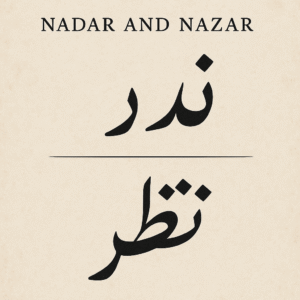
In Urdu, there are two words that look almost identical and differ by just a single dot—yet their meanings carry entire philosophies within them.
Nadar — ندر
Nazar — نذر
The difference is small in script, but profound in thought.
Nadar means grace, blessing, or divine favour.
Some believe that without Nadar, nothing in life is truly possible.
Good fortune, good character, and the capacity to perform good deeds—these are signs of being blessed. And those who lack Nadar often struggle to walk the right path.
Nazar, on the other hand, means perspective, vision, or way of seeing.
It belongs to the realm of self-awareness.
People evolve because they begin to see life differently—through introspection, reflection, and clarity. Change, when it is real, comes from Nazar.
One word suggests nothing is in my hands.
The other says everything is up to me.
The wisdom lies in balancing the two.
When it comes to improving yourself, strengthening your character, and transforming your life—lean on Nazar, your vision.
When achievements come your way, choose humility. Bow your head with gratitude and remember Nadar, the blessing behind your success.
But Nadar should never become an excuse to escape responsibility. Blessings do not replace effort, and grace does not replace growth.
Your deeds, your choices, your inner transformation—these always begin with Nazar.
Nadar ko samjho, to nagaarhe badal jayenge
Nazar ko badlo, to zindagi ke nazaare badal jayenge.
Understand blessings, and the trumpets of your ego will fall silent.
Transform your vision, and the entire horizon of your life will change.