
Introduction
Happiness — a word so simple, yet so elusive. We spend our lives chasing it, believing it lies somewhere in the next success, the next relationship, the next milestone. But what if happiness was never meant to be pursued? What if it was always within us, waiting quietly to be noticed?
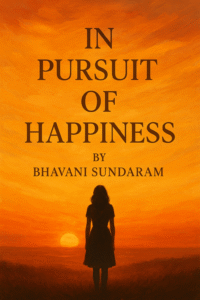
In Pursuit of Happiness is not just a story — it is an emotional odyssey. It is about Ana, a woman whose laughter could light up a room, whose presence could make life feel lighter, and yet whose heart carried unseen shadows. To the world, she was a ray of sunshine — vibrant, confident, and full of life. But behind that smile was a battle few could see.
Through Ana’s journey, we explore the paradox of human emotions — how joy and pain often coexist, how the past can shape us, and how resilience can bloom even in the darkest corners of the soul. It is a story of love and loss, of friendships that heal, of rediscovering oneself when life seems to have taken everything away.
Each chapter of this book mirrors a phase of Ana’s awakening — her fall, her endurance, her rediscovery of meaning. It reflects the truth that happiness is not a destination one arrives at, but a path one learns to walk — sometimes with tears, sometimes with laughter, but always with hope.
This is not just Ana’s story. It is the story of every person who has ever smiled through pain, loved through loss, and dared to find light again.
So, turn the page. Walk beside Ana. And perhaps, somewhere along her journey, you may find a reflection of your own — and realize that the pursuit of happiness begins not outside, but within.
The Girl Everyone Loves
The morning unfurled like a silk ribbon over the seafront—sky rinsed in pale gold, gulls sketching lazy commas above the water, and the scent of salt and warm bread drifting from the corner bakery. On days like this, Ana felt the world expect her to shine.
“Sunshine!” Mr. D’Souza called from his vegetable cart as she turned onto their lane. “You’ll make my tomatoes blush if you smile any wider.”
Ana laughed—the sound quick, bell-bright, practiced. She chose a fistful of basil and a plump tomato, paid more than necessary, and slipped the change into the tip jar with a wink. Behind the easy banter, she held her shoulders the way a dancer holds a pose—light, effortless, and absolutely precise.
Neighbors waved, doors opened, tea kettles hissed a chorus. A child on a tricycle pedaled past and declared, “There goes our sunshine!” His grandmother echoed it, the phrase drifting after Ana like perfume. She wore the words the way one wears a familiar sweater: soft at the edges, lovely in photographs, a little itchy underneath.
Peter’s bike bell chimed before she saw him. He coasted beside her, hair tousled by the sea breeze, a newspaper tucked under his arm as if he’d dashed out only to share a headline with her. “You’re early,” he said, matching her stride.
“I wanted to beat the crowds,” she replied.
“Impossible. The crowds are always chasing you.” He grinned, easy and unguarded. Peter’s grins were a fixture of her life, as dependable as the tide. They had learned to swim together in these very waves; they had learned to ride bikes on this lane, skinned knees and salty lips and promises made with their toes buried in wet sand. By the logic of the neighbourhood, they would one day turn into the sort of couple whose love stories older women told to convince teenagers that fate could be sweet.
They fell into an old rhythm—his bike rolling, her bag swinging, the morning mist kissing their forearms. Peter pointed out a stray kite tangled in an almond tree, the day’s first piece of sky that had forgotten its job. “Want me to get that for you?” he asked, already half-climbing the low wall.
“For me?” she teased. “I didn’t lose it.”
“No,” he said, hopping down and brushing dust off his hands. “But you always like to rescue things. Besides, it deserves better than a branch.”
He was right. She did like to rescue things—shreds of ribbon from gift boxes, a chipped blue teacup abandoned on the thrift-shop shelf, moments from sliding into awkwardness. The kite would be cut down and retied and sent back to its purpose, and everyone would exhale, thinking: of course Ana made it right again.
They reached the long gate that separated their houses—twins in a row of houses that wore the same color of whitewash and the same bougainvillea vines like shared jewellery. Between the two gardens, the gate latched with a click that sounded to Ana like a comma: pause, continue. Peter leaned his bike on the wall and handed her the folded newspaper. His fingers brushed hers—familiar contact, easy as breathing. “Breakfast?” he asked. “Mum’s making upma. Yours is probably something far tastier, but mine comes with my mother narrating the news like a sports match.”
“I’ll come after I shower,” Ana said. “Tell your commentators to be gentle with us today.”
He saluted. “See you in twenty, Sunshine.”
Sunshine. The word hung in the air after he’d gone. She let herself into her house and was immediately absorbed by the domestic theatre—her father at the table, reading glasses perched on his nose like a punctuation mark; her mother at the stove, coaxing cardamom into a simmering cup. The kitchen stabbed the light into shards on stainless steel bowls. “You’re early,” her mother said, the same words Peter had chosen, but this time delivered with mild astonishment.
“I wanted to beat the crowds,” Ana said, and both of them chuckled at the joke that wasn’t one.
Her mother pressed a cup of tea into her hands and tapped the rim as if blessing it. “You’re going to Sandra’s later? She called to ask what cake you like. Imagine—calling me to ask what cake my daughter likes, as if she doesn’t know your sweet tooth better than I do.”
“Chocolate, always,” Ana said, lifting the cup to her lips and letting the steam soften her face.
“Peter will come too,” her father murmured without looking up. “He said he’d help me fix the back gate latch. It squeaks like a parrot with opinions.”
“Peter fixes everything,” her mother said warmly. “Between you and him, our two families have no troubles at all.”
The tea was sweet, the cardamom measured, the house lulled into a familiar rhythm. But beneath it, a shy ache flickered. No troubles at all. What a luxury to say that and believe it. Ana smiled with her mouth; the rest of her practiced stillness.
Upstairs, she showered, letting the water drum against the nape of her neck until the roar thinned out her thoughts. She wiped a circle of steam off the mirror. The girl in the glass gazed back—the right tilt to her chin, the shade of pink that meant healthy, the little constellation of moles her aunt said were lucky. She touched the mirror’s surface and watched her fingertip split her reflection. Sometimes the girl looked like someone who had just come back from a long journey and could not find the door to her own home.
“It’s just a phase,” she told the girl kindly. “You’re tired.”
Her reflection smiled—as obedient as a photograph.
By the time she joined Peter’s family for breakfast, the day had gathered itself into a bright momentum. Peter’s mother narrated the headlines with theatrical flourish—rains in the north, a new park opening by the old church, the bakery introducing coconut macaroons that had sent lines curving around the block. “We should go try them,” she announced, then added, as if she had just found the answer to a riddle, “after all, happiness must be eaten while warm.”
Peter caught Ana’s eye and smothered a grin. “Scientific fact,” he whispered.
His father poured sambar with a generosity that left everything floating. The table hummed with the comfort of people who know how to talk without thinking, how to pass bowls and opinions with the same practiced ease. Ana ate, laughed, and felt—oddly—like a visiting actor wearing her own name on a sticker.
“You and Peter should come to the beach this evening,” his mother said. “We’ll pack bhel and cut fruit. The sunset has been beautiful lately, all those ridiculous oranges that look like someone is showing off.”
“We’ll come,” Peter said for both of them. He always did.
After breakfast, they walked to the church road to help with a community clean-up. It was the sort of thing Ana did without question, the sort of thing that made people tilt their heads in fondness when her name was mentioned. She tied her hair back, rolled up her sleeves, and joined the line of people passing bags, sorting glass from plastic, laughing at the absurd items the neighborhood had shed—a single roller skate, a plastic flamingo, a cracked mirror.
“Look,” Peter said, holding the mirror at arm’s length so the two of them appeared side by side in its broken field. “We look like a collage.”
“Aren’t we?” she said softly. He didn’t hear the weight in her tone.
At noon, Sandra arrived with lipstick too red for the sun and a smile that could cut paper. She air-kissed Ana’s cheeks and looped her arm through hers. “I need you to come be yourself at my cousin’s engagement tomorrow,” she said. “There are cousins coming in from out of town, and if they don’t meet you, they’ll think I invented you.”
“Will there be macaroons?” Ana asked with mock seriousness.
“I’ll make sure there are if it means you’ll come,” Sandra said, then peered at her face as if trying to read small print. “You’re okay? You look… quiet.”
“I’m listening,” Ana said, and let the conversation pop and fizzle around her like soda.
The day kept its promises—work, errands, a bit of gossip traded like seashells, a stolen hour at her desk where she matched receipts to neat columns and replied to emails with sentences crisply ironed. The sun slid toward an afternoon that glittered as if brushed with sugar. Through it all, Ana felt the gentle tug of an invisible thread pulling at her ribs, reminding her of something she could not name.
Near sunset, they all walked to the beach with baskets and blankets. The tide ran its fingers through the shoreline. Children built castles with moats that failed and failed again. Peter carried the heaviest basket and looked at her like he always had—like a person looks at a map they’ve memorized and still like to unfold.
“Do you ever feel,” she asked as they spread the mat, “like you can’t quite hear your own voice over the sound of everyone loving you?”
Peter paused, a paper plate in one hand. “Is this about the engagement party? We can skip it,” he said easily. “We’ll say we’re visiting my aunt. We can invent a vague illness.”
She laughed—she couldn’t help it. “It’s not the party.”
He sat beside her, elbows on his knees. “Then what?”
She opened her mouth and closed it again. The words she wanted were true and clumsy and would land between them like an untrained bird. She could feel Sandra watching them from a polite distance, the way friends watch people who might be in the first scene of a confession. Families chatted, children yelled, the ocean rehearsed its old story of coming and going.
“I think I’m tired,” Ana said finally. “The kind of tired sleep doesn’t fix.”
Peter’s gaze softened, then sharpened. He nudged her shoulder with his, a gesture from the old chronicles of their childhood. “Then we’ll figure out why,” he said. “We always do.”
It was a good answer. It was the sort of answer a person gives when they have never lost themselves and had to map their way back. She let it be enough for now. They ate bhel that bit the tongue with its tamarind, watched the orange show-off sky fold itself into violet, and let the crickets audition for the night.
Later, at home, Ana set the empty basket on the counter and took the stairs slowly. The house had quieted into the soft percussion of night—tap in the bathroom, a fan’s steadiness, the occasional bark from the street below. In her room, she sat at the vanity and pulled a brush through her hair, the strokes measured, repetitive, as if she could comb a thought into coherence. The mirror held her again, generous and unforgiving.
She smiled at herself—practice, muscle memory, politeness—and watched the smile sit on her face like a guest who didn’t know where to put their hands. Something in her chest went hollow and then wider, the way a shell sounds
Cracks in the Mirror
The next morning arrived soft and hesitant, like a curtain drawn halfway across a window. Ana awoke before her alarm, the air cool with the faint salt of the sea, and stared at the ceiling beams that looked like they carried not just the roof but the weight of expectations she hadn’t asked for.
She turned onto her side and reached for the seashells she had collected once with Peter as children. They lay in a small glass bowl by her bed, faded but stubbornly whole. She rubbed a thumb over the ridges of one, listening for the phantom whisper of waves. A whisper that felt closer to truth than all the voices that called her “sunshine.”
Her reflection waited in the bathroom mirror, hazy behind the steam. She wiped the fog away with a palm, revealing a face arranged carefully, like flowers in a vase—pleasing, deliberate, beautiful, but always meant for someone else’s gaze. Ana tilted her head, searching for the girl she once knew: wild hair, mischief in her grin, the kind of laughter that didn’t stop to check who was watching.
“Where did you go?” she whispered, and the girl in the mirror had no answer.
The day passed with ordinary routines: errands at the market, a phone call from her mother reminding her of Sandra’s cousin’s engagement party, a dozen small interactions that reinforced the idea that Ana belonged to everyone, except perhaps to herself.
By evening she was in Sandra’s living room, surrounded by chatter and glitter. Sandra, in a coral dress that caught every light, was laughing loudly with a group of cousins. She spotted Ana and rushed over, hugging her tightly. “Finally! My star is here. Everyone’s been asking when you’d arrive.”
Ana smiled as expected, offered polite greetings, and let herself be swept into conversations about clothes, weddings, holidays abroad. People told her how radiant she looked, how Peter was lucky, how her laughter made the room brighter. She answered each with practiced ease, though inside, she felt as though she were reciting lines from a play she no longer remembered auditioning for.
When the music slowed, she slipped out onto the balcony. The night air touched her with gentleness that no conversation inside could offer. She leaned against the railing, watching the moon stretch a pale road across the sea. For a moment, she imagined walking down that road, leaving behind the noise and the roles she had been assigned.
Sandra found her there. “Ana, what’s wrong? You’ve been quiet all evening.”
Ana hesitated, words rising like bubbles in her chest. “Do you ever feel,” she said slowly, “like you’ve become someone everyone expects you to be, but not the person you really are?”
Sandra tilted her head. “You’re overthinking again. You’ve always been the happiest one among us. You just need rest, that’s all. Maybe a holiday. Don’t worry, Ana, it will pass.”
Ana smiled faintly. It was the same answer she had always been given—that her doubts were a phase, her emptiness a passing cloud. But she knew clouds drifted, while shadows could linger far longer.
Later, back home, she stood in front of her mirror again. The girl inside the glass stared back—perfectly composed, every hair in place, eyes shining the way everyone said they should. Ana pressed her fingers against the surface, almost as if she could push through and pull the other girl out.
“Who am I when no one is watching?” she whispered.
Her reflection held her gaze, patient, silent, and unyielding. The crack wasn’t in the glass; it was in her heart. And she was finally beginning to see it.
Dreams and Shadows
Sleep came reluctantly that night, circling Ana like a wary animal before finally settling on her chest. Her body lay still, but her mind slipped through a door that opened onto another world.
She found herself in a vast hall without walls. The floor stretched endlessly in every direction, smooth and cold beneath her bare feet. Above her, a ceiling of shifting clouds pressed low, and from the mist emerged figures—blurred at first, then sharper as they drew close. They were familiar and strange at once: neighbours, cousins, colleagues, even children from her school days. Each face called her name, each hand reached toward her. Their smiles were too wide, their voices layered until they became a roar.
“Sunshine… sunshine… sunshine…”
The word echoed, twisting into a chant, then into a chain. It coiled around her wrists and ankles, tugging her closer to them. She tried to pull back, but the floor tilted forward, sending her stumbling into the swarm of hands. They touched her hair, her face, her arms, each grip heavy with expectation. Every gesture said: Be who we think you are. Shine, laugh, glow for us.
“I can’t breathe,” Ana whispered, though no sound came out. She tried to scream, but the roar of voices drowned her own. Her chest tightened; panic rose hot and sharp in her throat. She broke into a run, yet the crowd surged with her, their feet never touching the ground, their shadows always at her heels. The more she fled, the closer they came, until she felt herself sinking into them like water swallowing a stone.
Just as the darkness began to close in, she spotted a light in the distance. A narrow doorway, glowing faintly. With the last of her strength, she pushed her way through the crowd and burst toward it. The figures reached for her, fingertips grazing her shoulders, but she stumbled through the frame.
Ana fell hard onto the floor of her own bedroom. Her eyes flew open. She was drenched in sweat, her nightshirt clinging to her skin. The air around her was cool—too cool for how hot her body felt. Her breath came fast and shallow, heart thundering as though it had been racing for miles.
For a moment she sat in the dark, disoriented, clutching the edge of her blanket. Then, fumbling for the switch, she flooded the room with light. The familiar walls, the seashells by her bedside, the books stacked neatly in their corner—they all looked foreign, like props on a stage. She took a long sip of water, but the glass shook in her hand.
Unable to sit still, she walked out to the balcony. The night had quieted; only the sea moved, whispering its endless song. The rocking chair creaked as she sank into it. She pressed her palms together, trying to hold herself steady. The dream still clung to her skin like damp cloth.
The moon was high, casting a silver path across the waves. Ana watched it shimmer, her heartbeat slowly matching the rhythm of the tide. The ocean seemed to say: Come back. Remember who you are beneath all the voices.
She whispered to the dark, “I’m losing myself.”
No one answered. Only the sea replied, patient and eternal. The breeze touched her cheek like a mother’s hand, and something loosened in her chest. She realized she could no longer ignore what her heart had been trying to tell her. The emptiness, the exhaustion, the hollow smile—it wasn’t a passing cloud. It was a call.
As dawn approached, the sky softened to a bruised violet. Ana sat watching, her body weary but her mind strangely alert. She felt it again—the faintest glimmer of resolve, like a candle flame trembling in the dark. For the first time, she admitted it aloud: “I have to find the girl I lost.”
And in that fragile hour before sunrise, Ana understood—her pursuit of happiness would not be about finding someone else. It would be about finding herself
A Love Too Comfortable
Morning sunlight poured into Ana’s room as if determined to chase away the shadows of her restless night. She dressed slowly, each movement deliberate, and when she finally stepped out into the garden, Peter was already leaning against the shared gate, waiting for her. His easy grin was the same as always—warm, reassuring, the kind that could disarm anyone.
“You look tired,” he said softly. “Rough night?”
Ana forced a small smile. “Just couldn’t sleep.”
Peter tilted his head, studying her as though she were a puzzle he should already know the solution to. Then, without pressing further, he nudged the gate open. “Come on, I’ll walk you to the café. Coffee solves most things, doesn’t it?”
They fell into step together, their familiarity cushioning the silence between them. For years, their lives had been entwined—shared secrets, scraped knees, and dreams whispered on rooftops. Neighbors and family alike had built an unspoken story around them: Ana and Peter, destined for a happy ending. The thought should have comforted her. Instead, it sat on her shoulders like a cloak too heavy for her frame.
At the café, Peter ordered her favorite without asking. “One cappuccino with extra foam, and a butter croissant,” he said, grinning at the barista. Ana realized he knew her choices so well she rarely needed to speak. She wondered if that was love—or habit.
They found a corner table, sunlight brushing across the wooden surface. Peter unfolded the newspaper and pushed the arts section toward her. “Your favorite,” he said, already immersed in the headlines. The moment was ordinary, tender, safe. Safe in a way that frightened her.
Ana sipped her coffee, watching the froth cling stubbornly to the rim. “Do you ever think,” she began carefully, “that people expect too much of us?”
Peter glanced up, brow furrowed. “What do you mean?”
“Everyone assumes… us. That we’ll just follow the story they’ve written. Like it’s already decided.”
He smiled, but it was puzzled. “Why fight it if it’s a good story? I mean, you and I—we’ve always fit. Our families, our friends—they all see it. And honestly? I do too.”
His words were tender, genuine, but they tightened something in her chest. Fit. She wondered if she was a puzzle piece forced into a space because it looked close enough, not because it truly belonged there.
“Peter,” she said, her voice low, “what if I’m not the girl everyone thinks I am?”
He reached across the table and took her hand, his touch steady, familiar. “Ana, I know you. I’ve known you my whole life. You’re overthinking again. You’re perfect just as you are.”
Perfect. The word felt like a stone dropped into water, sinking fast, pulling the air out of her lungs. She withdrew her hand gently, wrapping both palms around her cup as if seeking warmth from it.
Peter didn’t notice the tremor in her silence. He leaned back, confident, certain that his reassurance had solved everything. To him, love meant comfort, safety, a lifelong friendship stretching seamlessly into forever. To Ana, it was beginning to feel like a script she no longer wanted to perform.
As they left the café, Peter slung his arm casually around her shoulders. She let him, the gesture so familiar it was muscle memory. People on the street looked at them and smiled knowingly. Couples meant to be, everyone thought. Sunshine and her anchor.
But Ana’s thoughts churned beneath the surface. She loved Peter, but in a way that no longer aligned with the story everyone had written for them. His comfort was real, but it wasn’t freedom. And deep down, Ana knew—love should make her feel alive, not trapped.
Walking home, Peter told her about a plan he had for fixing up the neighborhood park, his voice bright and certain. Ana nodded in the right places, but her mind whispered over and over: I need to find myself before I can belong to anyone else.
The Weight of Expectations
The week unfolded like a carefully scripted play, and Ana felt herself cast in every scene without ever being asked. At home, her mother spoke often about weddings—someone else’s, always someone else’s, but with glances that landed gently, insistently, on Ana. Her father chimed in with jokes about grandchildren, half in jest, half in prophecy.
Every conversation felt like a string tied around her wrist.
At work, her colleagues teased her about Peter. “You two are the dream,” one said as they huddled near the coffee machine. “Childhood sweethearts! It’s like something out of a movie. Don’t you dare disappoint us by not ending up together.” They laughed, but the words clung to her ribs like burrs. Disappoint us. It was never about her choice, only about the story everyone wanted to believe.
In the evenings, she accompanied Peter to family dinners, community gatherings, little neighborhood rituals where her presence was expected. Each time, people beamed at them, spoke of them as though they were already one. Ana smiled, nodded, played her part. Inside, the silence grew louder.
One afternoon, Sandra dropped by unannounced, bursting into Ana’s room with a flurry of perfume and bracelets. She collapsed onto the bed and sighed dramatically. “My mother thinks I should learn from you. She says, ‘Look at Ana, so perfect, so dependable, so ready for marriage.’ Can you believe that? I told her you’re just better at hiding your flaws.”
Ana laughed weakly, but her chest tightened. “I’m not perfect, Sandy.”
“Of course you are,” Sandra said, propping her chin on her hand. “You’ve got Peter, everyone adores you, you’ve never once given your parents a reason to worry. You’re the poster girl for happiness. Honestly, sometimes I’m jealous.”
Ana turned to the window, where the sea was a restless sheet of silver. “Maybe being the poster girl isn’t as easy as you think.”
Sandra waved her off. “Don’t be dramatic. Some of us would kill to be in your shoes.”
That night, Ana lay awake, staring at the ceiling. Everyone’s expectations felt like invisible weights pressing down on her chest. She thought about the dream again—the crowd reaching for her, chanting her name. It wasn’t just a dream. It was her life, played out in daylight.
The thought terrified her: what if she had lived so long for others that she had forgotten how to live for herself?
She sat up and turned on the lamp. Her eyes landed on the seashells on her bedside. She picked one up, pressing it to her ear. The faint roar of the ocean filled her. For the first time in weeks, she allowed herself to cry—not quietly, not politely, but with a grief that soaked her pillow. She wept for the girl who had been free, the girl she had lost, the girl she was desperate to find again.
When the tears finally ebbed, Ana whispered into the night: “I can’t keep carrying the weight of everyone else’s dreams. I have to find my own.”
The words trembled in the air but felt like truth. A fragile, rebellious truth that would change everything.
Alone in a Crowd
The engagement party was a grand affair, a hall strung with lights that glittered like captive stars. Music swelled, conversations collided in waves, and laughter curled through the air like smoke. Everyone was dressed in jewel tones, their smiles polished to match.
Ana entered with Peter by her side, his hand warm against her back, steadying her as they stepped into the blur of voices and cameras. Immediately heads turned. Whispered greetings rose in a chorus: “There they are—Ana and Peter.” Aunts nudged one another, cousins exchanged knowing glances. The unspoken verdict echoed in every look: perfect together.
She smiled, laughed at the right jokes, posed for photographs. Compliments rained on her—her dress, her smile, her grace. “Sunshine,” someone called across the room, and the word drew a round of approving chuckles. She obliged with another laugh, practiced and light. But inside, her pulse drummed, heavy and out of sync.
While the others toasted and clinked glasses, Ana’s gaze drifted. She saw couples whispering to each other, friends lost in private jokes, families huddled close. The room hummed with belonging, yet she felt detached, as though she were watching it all through a pane of glass.
Sandra swept up to her, radiant in emerald silk, cheeks flushed with excitement. “Ana, everyone’s asking about you. They want to know how you do it—always happy, always glowing. Tell me your secret so I can borrow it.”
Ana’s throat tightened. “There isn’t a secret,” she said, her voice thinner than she intended. “Sometimes… it’s just a mask.”
Sandra laughed lightly, mistaking it for humor. “Well, it suits you. Keep wearing it. You’re the life of every room.”
The words hit Ana like a stone. Keep wearing it. She nodded, though her chest felt like it was caving in. As Sandra moved on, Ana excused herself and slipped out to the balcony. The night was cooler than the hall, the air salted with freedom. She leaned on the railing, her shoulders sagging as if the weight of the party had finally pinned her down.
From inside, she could still hear the music, the chatter, the easy rhythm of people who belonged. Out here, it was just her and the sky—vast, quiet, honest. She closed her eyes and let the silence wrap around her. For the first time that evening, she felt something close to peace.
Peter found her there. He slid the balcony door open and stepped beside her. “You disappeared,” he said gently. “Everyone’s looking for you.”
“Of course they are,” Ana murmured, her eyes still fixed on the stars. “Everyone always is.”
He frowned, sensing the heaviness in her words, but before he could speak she added quickly, “I just needed some air. Go back inside, I’ll follow.”
Peter hesitated, then kissed her temple lightly and returned to the crowd. Ana stayed behind, staring at the horizon where the sea met the night. She felt utterly, achingly alone—even in a room full of people who adored her. Especially there.
In that moment, she understood the cruel irony: she was surrounded, yet unseen. Beloved, yet unknown. She was the center of attention, but her own heart remained on the margins.
And as the music swelled again, Ana whispered to herself, “I don’t know how much longer I can live like this.”
A Night of Realization
The house was quiet when Ana returned late that night. The engagement party had left her drained, every smile a stitch in a costume she no longer wanted to wear. Her parents were asleep, the lights dimmed to little pools of gold on the staircase. She climbed slowly, her feet heavy, her mind louder than the silence around her.
In her room, she dropped her shoes and let her dress slide off her shoulders, pooling on the floor like a shed skin. Standing in her slip, she faced the mirror. The girl who stared back looked flawless—hair pinned neatly, lips touched with coral gloss, eyes wide and shining. Perfect. Exactly as everyone expected.
Ana stepped closer, until her breath fogged the glass. She whispered, “Who are you?”
Her reflection did not answer, only smiled back with the same mask she had worn all night. Ana’s chest tightened. For a moment she imagined shattering the mirror, splintering that too-perfect face into fragments, each shard reflecting a different version of herself. Maybe then she would find the real one.
Instead, she sat on the edge of the bed, pressing her hands against her face. Tears prickled but did not fall. She felt suspended in a moment between collapse and clarity. The dream of the crowd came back to her—those voices chanting, pulling, binding. She realized it wasn’t just a dream. It was a warning. A mirror of the life she was living.
Ana stood again, her body trembling, and returned to the mirror. This time she didn’t smile. She looked hard at her own eyes until the gloss of perfection cracked. The ache inside her surged, demanding to be acknowledged. She whispered, almost fiercely, “I’ve lost myself.”
The words lingered in the air, raw and undeniable. For the first time, she wasn’t pretending. She wasn’t masking her pain with laughter or smoothing it over with politeness. She was naming it.
Her pulse slowed as the truth settled into her bones. She couldn’t go on living for everyone else—pleasing, performing, perfecting. The girl she once was, fearless and alive, had been buried under the weight of expectations. But she wasn’t gone. She was waiting.
Ana touched the mirror again, her fingertips cold against the glass. “I’m coming to find you,” she promised the reflection. “No matter how long it takes, I will bring you back.”
Exhausted but steadied, she slipped beneath her sheets. The night held her gently, like a parent who had been waiting for her to admit the truth. For the first time in weeks, she closed her eyes without dread. She had no answers, no plan, only a fragile vow whispered to herself. But it was enough.
And as she drifted toward sleep, Ana felt a strange kind of peace—the peace that comes not from hiding, but from finally facing the storm within.
The New Dawn
The first light of morning crept softly into Ana’s room, spilling over the curtains in pale gold. She stirred before the alarm rang, her body restless but her spirit oddly alert. The memory of last night’s vow lingered in her chest like a small ember—fragile but glowing. For once, she didn’t press it down. She let it burn.
Pulling on a loose dress, she stepped quietly out of the house. The neighborhood still slept, windows dark, the air cool with dew. Her father’s newspaper hadn’t yet been delivered, the milkman’s cycle hadn’t rattled past. It was a world paused, waiting. And Ana felt, for the first time in a long while, free from eyes that expected her to be someone she wasn’t.
She walked toward the beach. Each step felt lighter, as though something had unlatched inside her. When she reached the sand, the horizon stretched wide and infinite, the sea rolling in with its eternal rhythm. The waves reached for her toes, playful and insistent, and she laughed—really laughed, the sound bursting from her without thought.
It startled her. The laugh didn’t sound like the one she wore at parties, polished and light. This laugh was raw, unshaped, carrying both relief and defiance. It was her own.
Ana ran toward the water, her dress whipping around her legs. The sea spray kissed her skin, the breeze tangled her hair. She let her arms spread wide as if she could embrace the whole morning. “I am alive!” she cried into the wind, her voice rising above the crash of waves.
For a long time she simply stood there, letting the tide lick her feet, the breeze sing through her hair, the birds circle overhead with songs of their own. She felt part of it all, small but whole, no longer hidden behind roles and expectations.
Sitting on the sand, she dug her fingers into the grains, warm and cool at once. Seashells dotted the shore, glinting in the sunlight. She picked up a small one—pink, ridged, fragile yet unbroken. Holding it in her palm, she whispered, “I’ll remember.”
Back home, her father was at the table with the day’s paper, surprised to see her so early. “You’re up before me,” he chuckled. “What happened to my late-riser?”
Ana kissed the top of his head. “She’s still here,” she said, smiling. “But she’s learning to watch the sunrise.”
Her mother peeked from the kitchen, eyes soft with a quiet smile. “It’s good to see you like this, Ana.”
Ana only nodded, not ready to explain, but grateful they noticed.
Later, she placed the seashell by her bedside. It would be her reminder—of the dawn she chose to meet, of the girl she was beginning to find again, of the promise she had made to herself. The shell was small, but to Ana it was a token of courage, proof that happiness could begin with something as simple as listening to her own heart.
And as she glanced at the mirror before leaving for the day, she saw not just the mask of perfection, but a glimmer of the wild, fearless girl she thought she had lost. The spark was faint, but it was there.
This time, she didn’t turn away. She smiled at her reflection—not the practiced one, but the kind that reached her eyes.
Tomorrow, she thought, would bring its own battles. But today, at least, was hers.
The Power of Solitude
In the days that followed, Ana carved out little pockets of time for herself—moments she had never thought to claim before. They were small, almost invisible to others, but for her they were lifelines. Instead of rushing through her mornings, she lingered at the balcony, letting the sea breeze brush her cheeks, listening to the waves as if they carried secret answers only she could hear.
One afternoon, she walked alone to the old stone jetty where she and Peter had once fished as children. She sat cross-legged on the uneven rocks, her journal resting on her lap. At first, the words wouldn’t come. Her pen hovered, her mind caught between too many thoughts. But then, slowly, she began to write—not about the expectations of others, not about what people wanted from her, but about herself. What she feared. What she longed for. What she had forgotten.
The pages filled with truths she had never dared to speak aloud. With every line, she felt a weight lift, replaced by a fragile lightness. She realized she had never given herself this gift before: to sit still, to listen inwardly, to let her own voice speak without interruption.
Solitude was not loneliness, she understood now. It was a mirror, one that didn’t ask her to smile or perform. It simply reflected her as she was, raw and unpolished, yet entirely real.
She began to make rituals of these moments. A walk along the shoreline at dusk, barefoot, letting the waves tug at her ankles. An hour with paints, colors splashing on paper without rules or reason. Humming to herself as she watched the sun slip behind the horizon. Each act was small, but together they wove a tapestry of selfhood, a reminder that she was more than the version of herself the world adored.
Peter noticed the changes first. One evening he found her sketching seashells on the porch. “You’ve been quieter lately,” he said, settling beside her. “Different.”
Ana hesitated, then answered honestly. “I’m trying to remember who I am when no one’s watching.”
Peter frowned, puzzled. “You don’t need to remember. You’ve always been you.”
She smiled faintly, shaking her head. “Not the me everyone sees. The me I lost.”
He didn’t press her, though his confusion lingered in his eyes. For Peter, love was simple and steady, unquestioned.
For Ana, love—life—was becoming something far more complex. And she was only just beginning to accept that complexity.
That night, she placed her journal on her bedside table next to the seashell. Two talismans, side by side—one to remind her of where she was, the other of where she was headed. She ran her fingers over the cover and whispered, “This is only the beginning.”
As the night deepened, Ana understood something essential: solitude was not an escape. It was a return. A return to the girl she once was, and the woman she was still becoming.
Confronting Peter
It was a quiet evening when Ana decided she could no longer carry her silence like an anchor. The sky had turned a dusky lavender, the kind of color that softened everything it touched. She and Peter were walking along the beach, their footsteps sinking side by side in the damp sand. It had been their routine for years—easy, familiar, comfortable. But tonight, the familiarity pressed down on her chest like a weight.
Peter tossed a pebble into the waves. “You’ve been distant lately,” he said, his voice light but edged with concern. “Even Sandra mentioned it. Is something wrong? Did I do something?”
Ana shook her head. “It’s not you, Peter.”
He looked at her, waiting. His eyes were steady, full of the same loyalty he had carried since childhood. The loyalty that made everyone say he was perfect for her. The loyalty that made her feel safe—and trapped.
She stopped walking. Her toes dug into the sand, anchoring her. “Peter, I need to tell you something. And I don’t know if you’ll understand.”
His brow furrowed. “Try me.”
She took a deep breath. “I feel like I’ve lost myself. Everyone sees me as this… sunshine girl. Always smiling, always perfect. But inside, I feel empty. Like I’ve been performing a role for so long that I don’t even know who I really am anymore.”
Peter’s face softened, but confusion flickered in his eyes. “Ana, you don’t have to be perfect. You’re already enough. You’ve always been enough.”
Her throat tightened. “But that’s just it—I don’t feel like me anymore. And the more I try to fit into what everyone expects—what even you expect—the further away I get from myself.”
He reached for her hand, gripping it tightly. “I don’t expect anything from you. I just love you. Isn’t that enough?”
Ana’s eyes filled with tears. She wished it were that simple. “Peter, your love is safe. It’s steady. And I care for you so much. But I need more than safety right now. I need to find who I am—outside of us, outside of everyone else’s story. If I don’t, I’ll disappear.”
His hand loosened in hers. Hurt flickered across his face, quickly masked by a forced smile. “So… what are you saying?”
“I’m saying I need time,” she whispered. “Time to figure out who I am without the weight of expectations. Even if that means stepping back from you. Not because I don’t love you, but because I have to learn to love myself first.”
Peter looked away, his jaw tightening. The waves filled the silence between them, rising and falling like the rhythm of their shared past. Finally, he nodded slowly. “If that’s what you need, Ana… I’ll give it to you. But don’t shut me out completely. Promise me that.”
She touched his arm gently. “I promise.”
They stood there, side by side, staring at the horizon where the sun had nearly slipped away. The comfort between them was cracked but not broken, fragile but alive. For Ana, the moment was terrifying—and liberating. She had spoken her truth. And though it hurt, it was the first real step toward reclaiming herself.
As the tide crept higher, Ana felt the ocean’s cool touch on her feet. It was as if the sea itself was reminding her: change is inevitable, but so is renewal.
Redefining Happiness
Ana woke the next morning with a sense of both fear and freedom. The conversation with Peter had left her shaken, but beneath the unease, there was relief. For once, she had spoken without wearing her mask. She had told the truth. And even though it had hurt, it felt like breathing after holding her breath for too long.
Instead of filling her day with obligations, Ana made a different choice. She walked down to the market, not to buy groceries or run errands, but simply to wander. She let her eyes linger on things she had always rushed past: the glistening fish at the stalls, the rows of spices releasing heady aromas, the bright saris swaying like captured rainbows. She stopped at a small corner shop and bought a set of watercolors, something she hadn’t touched since childhood. The thought of painting again made her heart flicker with a strange excitement.
That afternoon, she spread the paints and brushes across her desk, her journal open beside her. At first her strokes were hesitant, the colors blending awkwardly. But soon she stopped caring about perfection. She painted seashells, waves, the outline of a girl standing on the shore. It wasn’t beautiful, but it was hers. For the first time in years, she felt joy in creating something that didn’t need anyone’s approval.
Later, she sat on the veranda with her journal and wrote lists—not of tasks, but of desires. Small, simple ones: to watch the sunrise twice a week, to try cooking a new dish, to read poetry aloud, to learn to play the guitar her father had tucked away years ago. Each desire felt like a piece of herself she had left scattered along the way. Collecting them now felt like stitching together a quilt of her own identity.
In the evening, she took a long walk alone, letting the rhythm of her steps guide her thoughts. The sea breeze wrapped around her, the horizon stretched endlessly, and for once she didn’t feel the urge to rush home or meet anyone’s expectations. She was exactly where she wanted to be—alone, but alive.
Her parents noticed her changes in subtle ways. Her mother found her humming while cooking, her father caught her sketching seashells on scraps of paper. “You look lighter these days,” her mother said one night, a question hiding in her tone.
Ana smiled softly. “I’m learning to be myself again.”
Even Peter, though still hurt, sensed the shift. When they met briefly to help with a neighborhood event, he watched her laugh—not the practiced kind, but the raw, surprised laughter he remembered from years ago. It unsettled him, but it also made him realize she was searching for something he could not give her.
Ana returned home that night and placed her painting of the seashells beside the real ones on her table. The image was imperfect, but when she looked at it, she felt pride. Not because it was good, but because it was hers.
She whispered into the quiet room, “Happiness isn’t something I have to perform. It’s something I create for myself.”
And with that, she began to believe that the pursuit of happiness wasn’t about reaching a destination at all—it was about rediscovering the joy in each small, honest moment.
Breaking the Mold
Ana’s small changes did not go unnoticed, and not everyone welcomed them. At first, her family and friends saw her newfound independence as a passing phase. But as days turned into weeks, and Ana chose differently—sometimes even chose herself—the unease around her grew.
One morning at breakfast, her mother watched her sketching in the margins of the newspaper. “Ana, what’s happening to you lately? You don’t seem as focused. You’re skipping social events, avoiding family gatherings. People are starting to ask questions.”
Her father cleared his throat. “Your mother’s right. We’re not saying stop your hobbies. But don’t forget what matters—your future, your marriage, your responsibilities. Peter is waiting. Everyone is waiting.”
Ana set down her pencil and looked at them, her heart racing. For so long she had bent to these expectations without question. But this time, her voice came steady. “I haven’t forgotten. I just don’t want to live only for what others expect of me. I need to live for myself too.”
Her mother frowned, clearly unsettled. “But Ana, you’ve always made us proud by being who you are. Don’t change now. Don’t make people think you’ve lost your way.”
Ana took a deep breath. “I haven’t lost my way. I’m finding it.”
The words startled even her, but once spoken, they felt undeniable.
Later, Sandra confronted her too. They were sitting in a café, and Sandra leaned in, her bracelets clinking with irritation. “Ana, everyone is talking. You’ve stopped being the life of the party. You leave early, you’re quieter, distracted. This isn’t you.”
Ana stirred her coffee slowly. “Maybe this is me, Sandra. Maybe the girl you all loved—the perfect, cheerful Ana—was just a version of me trying too hard to fit in.”
Sandra blinked, thrown off balance. “But why change? Everyone adored you. You were the example!”
“Exactly,” Ana replied softly. “I was adored. But I wasn’t seen.”
The silence that followed was heavy. Sandra shifted uncomfortably, unable to understand, while Ana felt both the sting of her friend’s disapproval and the strength of her own conviction.
At a neighborhood dinner that week, the tension sharpened further. Someone joked that Ana and Peter should start planning their wedding, and when Ana gently said, “I don’t think I’m ready for that,” the room froze. Jaws tightened. Smiles faltered. Her words were a crack through the perfect image everyone had painted.
Afterward, Peter pulled her aside. “You shocked them,” he said. His tone was calm, but his eyes betrayed unease. “They don’t understand why you’re pushing against everything that’s supposed to make us happy.”
Ana met his gaze. “That’s just it, Peter. What makes them happy doesn’t necessarily make me happy. I need to break free of the mold they’ve built for me. Even if it scares them. Even if it scares you.”
Peter looked at her for a long time before sighing. “I want to support you, Ana. But I don’t know how to stand with you when you’re walking away from everything we were meant to be.”
She reached for his hand, squeezed it once, then let go. “I’m not walking away from love, Peter. I’m walking toward myself. If you can walk beside me, I’ll be grateful. But if you can’t… I still have to go.”
That night, as Ana placed another seashell by her bedside, she realized something vital: growth was not gentle. It was jagged, painful, and misunderstood. But it was also necessary. And she would rather be misunderstood for being true than celebrated for being false.
Sandra’s Realization
For days after their uneasy conversation, Sandra kept her distance. Ana noticed the absence—her friend’s silence at gatherings, the lack of calls or sudden visits. It stung, but Ana told herself this was part of the cost of change: not everyone would walk beside her on the journey. Still, the ache lingered. Sandra had been her confidante since school, the one who had known her laughter and her tears. Losing that bond, even temporarily, felt like losing a piece of herself.
One Saturday afternoon, Ana sat at the café with her journal open, sketching the outline of a wave when Sandra appeared. She stood at the edge of the table, hesitant, her usual confident energy dimmed. “Is this seat taken?” she asked.
Ana shook her head, surprised. “Of course not. Sit.”
Sandra slid into the chair, her bracelets muted against the wooden table. For a long moment, she didn’t speak. Finally, she sighed. “Ana, I owe you an apology.”
Ana blinked. “For what?”
“For not listening. For brushing off what you were trying to tell me. I thought you were just being dramatic. But the truth is… I was scared. Scared of you changing, because if you could change, it meant maybe I needed to change too.”
Ana’s eyes softened. She hadn’t expected this honesty. “Sandra, I never wanted to push you away. I just needed to be honest about what I was feeling.”
Sandra nodded, fiddling with her coffee spoon. “I’ve been thinking a lot since that night. You’re right. We all loved the version of you that made us comfortable, the one who never questioned anything. But seeing you step out of that mold… it made me realize I’ve been hiding too. Behind laughter, behind noise, behind pretending everything is fine when it isn’t.”
Ana reached across the table, touching Sandra’s hand gently. “It’s not easy, Sandy. People will question you, resist you, maybe even leave. But the freedom of being yourself is worth it.”
Sandra’s eyes glistened. “I don’t know if I’m brave enough.”
“You don’t have to be brave all at once,” Ana said softly. “Just honest. Start there.”
They sat in silence for a while, sipping coffee, the tension between them easing into something new—something deeper than before. Sandra broke into a small smile. “So, what’s next for you, Ana? Where is this journey taking you?”
Ana laughed lightly. “I don’t know. And for the first time, that doesn’t scare me.”
Sandra studied her, then shook her head in wonder. “You’ve changed, Ana. Not in the way I feared, but in a way I think I needed to see. You’re… lighter. Stronger.”
Ana squeezed her hand. “Maybe one day you’ll find your own seashells too.”
Sandra tilted her head. “Seashells?”
Ana smiled. “Little reminders that even when the tide pulls us under, we can still surface. We can still choose to be whole.”
Sandra chuckled, a tear slipping free. “Leave it to you to make seashells sound like a philosophy.”
Ana grinned. “Maybe it is.”
As they walked out together, Ana realized that something had shifted. Sandra might not fully understand her path yet, but she was beginning to see it. And that was enough. True friendship, Ana thought, wasn’t about staying the same. It was about growing—even if it meant growing apart for a while, then finding each other again.
Embracing the Unknown
Ana found herself walking along the shoreline more often these days, her footsteps weaving patterns that vanished with the tide. The ocean had become her confidante, its rhythm steady and unjudging. Each wave seemed to remind her that endings and beginnings were part of the same cycle—that to lose herself had only been the start of finding something greater.
One morning, she stood at the edge of the water, watching fishing boats sway like cradles against the horizon. The uncertainty of the sea mirrored her own path. For the first time, she didn’t fear it. Instead, she felt a strange exhilaration. Life didn’t need to be a neatly drawn map. It could be a compass pointing her toward discovery.
That afternoon, she signed up for an art class at a community center. The thought of creating among strangers thrilled her, though a part of her quivered with doubt. Would she be good enough? Would people laugh at her amateur strokes? Then she remembered her vow: happiness wasn’t about performing. It was about being. So she walked into the room, heart pounding, and introduced herself simply as Ana—no titles, no expectations, no “sunshine.”
At first, her brush moved stiffly. But then she let go, and the canvas bloomed with colors—wild, imperfect, alive. The teacher smiled warmly. “You paint with feeling,” he said. Ana smiled back, realizing it was the first compliment in years that felt like it belonged to her, not to the mask she wore.
Outside of class, she began to explore other parts of herself she had long abandoned. She borrowed her father’s guitar and strummed clumsy chords until her fingers ached. She wandered into the library and lost herself in poetry she had never read before. She even took a short trip alone to a nearby town, walking its unfamiliar streets with curiosity instead of fear.
For the first time, uncertainty wasn’t a shadow—it was a lantern. Each new experience lit a small fire within her, guiding her forward. She began to understand that the pursuit of happiness wasn’t about reaching a final destination. It was about choosing courage every day, even when the path was unclear.
When she returned from her trip, Peter was waiting at her gate. His expression was soft, uncertain. “You’re different,” he said quietly. “Not in a bad way. Just… different.”
Ana met his gaze, calm and steady. “I’m still me, Peter. Just not the version everyone decided I should be.”
He nodded slowly, though the conflict in his eyes remained. “I don’t know where this leaves us.”
Neither do I,” she admitted. “But I’ve realized something. I don’t need to know. I just need to keep moving forward.”
They stood in silence, the unspoken truth settling between them. Their bond wasn’t gone, but it was shifting, reshaping itself into something neither of them could yet define.
That night, Ana placed another seashell beside the others. Each one had become a marker of her journey, a reminder that she was building a life not from certainty, but from choice. She looked at the small collection and whispered, “I don’t need to see the whole path. I just need to trust the next step.”
And with that, she finally embraced the unknown—not as something to fear, but as the very place where she could begin again.
Standing in Her Own Light
The town’s annual cultural festival was approaching, and Ana had never once considered participating. In the past, she would attend with Peter or Sandra, smiling for photos, tasting food from stalls, applauding performances—but never stepping onto the stage herself. She had always been the audience, never the performer. Until now.
This time, when the community centre asked for volunteers to showcase art, music, or poetry, Ana’s hand lifted before she could second-guess herself. “I’ll do it,” she heard herself say. Her heart pounded, but she didn’t take the words back.
In the days that followed, she poured herself into preparing. She chose not to paint something polished, but something real: a canvas that captured her journey—half in bright colours, half in muted shades, with a lone figure walking from shadow into light. It was raw, imperfect, vulnerable. And for the first time, that felt like enough.
The evening of the festival arrived with the hum of voices and the glow of lanterns strung between trees. Families gathered, children ran with sparklers, the air smelled of roasted corn and jasmine garlands. Ana stood near the stage, clutching her painting against her chest, her palms damp. A part of her wanted to run, to slip back into the safe anonymity of the crowd. But another part—the part she had promised to honor—held her ground.
When her name was called, she stepped onto the stage. The lights blinded her for a moment, and the murmur of the audience grew quiet. She took a deep breath, steadying herself. “This is my work,” she said, her voice trembling at first, then stronger. “It isn’t perfect. It isn’t polished. But it’s mine. And it tells the story of losing myself—and finding the courage to begin again.”
She unveiled the painting. A hush fell over the crowd. For once, no one called her “sunshine.” They simply looked—really looked. Some nodded, some smiled, some seemed puzzled. But none of it mattered. Ana felt a weight lift from her chest. She wasn’t performing to please them. She was standing in her own light.
From the side of the stage, she caught Sandra’s gaze. Her friend’s eyes shone with pride, a small nod of encouragement passing between them. In the crowd, Peter stood still, his expression unreadable, but his presence steady. Ana realized she didn’t need his approval, or anyone else’s. What mattered was that she had shown up as herself.
When the applause finally came, it felt different. Not like the empty cheers of a crowd demanding their sunshine, but like recognition—for her courage, for her truth.
Afterward, as she walked home beneath the lanterns still glowing faintly, Ana felt lighter than she ever had. The night air wrapped around her, alive with possibility. She whispered to herself, “This is who I am. And I will never dim my light again.”
Back in her room, she placed her painting against the wall, beside the seashells and journal. Together, they formed a small shrine to her journey, a testimony that she had chosen not just to survive, but to live. She sat for a long while, watching the soft glow of the lamp reflect off the canvas, until her heart settled into a rhythm that felt steady and true.
For the first time, Ana felt not like someone else’s sunshine, but like her own.
The Seashell Promise
The morning after the festival, Ana awoke with a sense of quiet triumph. The memory of standing on that stage still shimmered in her chest like a lantern that refused to go out. She stretched, walked to her bedside, and her eyes fell on the small collection of seashells she had gathered over the past weeks. Each one held a story, a moment of courage, a step toward freedom.
She picked up the first shell—the tiny pink one she had found the day she shouted into the waves, I am alive! It had been her beginning. Then another, ridged and white, which reminded her of the afternoon she wrote in her journal for the first time, pouring herself onto the page without apology. There was a darker one, grey and smooth, collected after her conversation with Peter, when she had finally spoken her truth despite the fear of losing him.
Now, she added a new shell to the collection, one she had picked up on her walk home from the festival. It was larger than the others, with swirls of cream and amber, strong yet delicate. She placed it carefully at the center of the group, her fingers lingering on its surface. This one would remind her of the night she stood in her own light.
Sitting on the edge of her bed, Ana whispered aloud, as if the seashells were listening. “Whenever I doubt myself, whenever I feel lost, I’ll remember these moments. These shells are proof that I can fall, break, and still return whole. They are my promise to never forget who I am becoming.”
Her voice trembled, but not with fear. With conviction.
Later that day, she carried the shells to the beach. She didn’t leave them there, but she set them down for a while on the sand, letting the tide brush against them. It felt like a ritual—returning them to the sea that had witnessed every stage of her awakening. When she gathered them back into her pouch, she felt renewed, as though the ocean itself had blessed her journey.
Sandra met her there, barefoot, her dress flapping in the breeze. “You’re different, Ana,” she said softly. “I can see it in your eyes. Stronger, braver.”Ana smiled. “Not braver, Sandy. Just truer.”
They walked together, silent but comfortable, the sea stretching wide and infinite beside them. The shells clinked gently in Ana’s pouch, each sound like a reminder, like a vow repeating itself.
That night, back in her room, she arranged the shells neatly by her journal and painting. She lit a small candle, the flame dancing in the stillness. Looking at her little altar of truth, Ana whispered again: “This is my seashell promise—I will never give up on myself. No matter what happens, I will always come back to me.”
And in that moment, she knew the promise wasn’t just for herself. It was for the girl she once was, for the woman she was becoming, and for the life still waiting to unfold.
A New Beginning
The dawn that followed was unlike any Ana had seen before. The sky stretched wide in hues of rose and gold, the waves rolling in with a steady rhythm, as if the universe itself was breathing with her. She stood barefoot on the beach, her seashell pouch tucked safely under her arm, and felt a deep calm settle into her bones. This was not the beginning of another day to perform or please. This was the beginning of her life on her own terms.
She walked slowly along the shoreline, the sand cool and damp beneath her feet. For the first time in years, her steps didn’t feel heavy. She no longer carried the invisible weights of expectation, no longer bent herself into the shapes others wanted to see. She had chosen to belong to herself.
Sandra arrived a little later, holding two cups of chai in her hands. “I thought you’d be here,” she said, smiling as she handed one to Ana. They sat side by side on a driftwood log, sipping the warm tea while watching the sun climb higher.
“Do you ever wonder,” Sandra said quietly, “what our lives would look like if we stopped worrying about what everyone thinks?”
Ana smiled, the sea breeze tangling her hair. “I don’t have to wonder anymore. I’m learning to live it.”
Sandra nudged her shoulder playfully. “Maybe I’ll learn too. You’re contagious, you know.”
They laughed together, the kind of laughter that was free of masks.
Later, Peter found her near the rocks where they used to play as children. He looked uncertain, his hands buried in his pockets. “I heard about the festival,” he said. “And I saw you. On that stage. You were… different. Brave.”
Ana met his eyes, her voice gentle. “I wasn’t brave, Peter. I was just honest. For once.”
He nodded, shifting his weight. “I don’t know what the future holds for us. But I want you to be happy, Ana. Even if it means letting go of the picture everyone painted for us.”
Her chest tightened, but this time not with fear—with gratitude. “Thank you, Peter. That means more than you know.”
They stood in silence, watching the waves crash and retreat, as if the ocean itself was reminding them that love, like tides, could take new forms. Whether their paths would join again or part, Ana knew she had the strength to face it.
That evening, back in her room, Ana lit the candle by her seashells and journal. She touched each shell, remembering the promises tied to them. Then she opened her window wide, letting the night air rush in, carrying the scent of salt and jasmine. She whispered into the dark, “I am here. I am alive. I am enough.”
Her reflection in the glass no longer looked like a stranger. The girl she had once lost was slowly, surely returning—wiser, stronger, whole. And as Ana lay down to sleep, she knew the pursuit of happiness wasn’t over. It never would be. Because happiness wasn’t a finish line. It was a choice, a practice, a way of living.
Tomorrow would bring its challenges. But tonight, she rested in the knowledge that she had chosen herself.
And that was the most beautiful beginning of all.