
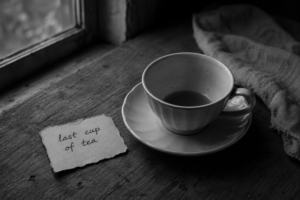
The First Cup
The kettle always whistled before the sun fully arrived.
It was a thin, impatient sound, cutting through the half-sleep of the house, threading itself into corners that still belonged to night. Ananya heard it from the bedroom and did not move immediately. She lay still, eyes open, watching the slow fan above her complete its endless circles, as if it too were waiting for permission to begin the day.
Mornings had become a matter of sequence rather than feeling. Kettle. Cups. Tea leaves. Milk. Sugar. Silence.
She rose carefully, the way one does after years of sharing a bed mindful not to disturb the other body that lay turned away, breathing evenly, its back familiar as furniture. Raghav slept on his side now, a habit that had crept in without discussion. Once, long ago, they had slept facing each other, limbs tangled, conversations spilling into the dark. Somewhere along the years, the night had turned its back on them.
In the kitchen, light filtered in reluctantly, pale and uncertain. Ananya filled the kettle with water, the tap coughing before settling into a steady stream. She reached for the tea box on the second shelf the one with the chipped corner and paused, as she always did, measuring nothing yet deciding everything.
Two spoons of tea leaves. One and a half of sugar. Raghav liked his tea sweet. He always had.
She placed the saucepan on the stove and waited. Waiting had become a skill she possessed in abundance. Waiting for water to boil, for words to form, for days to pass. The flame flickered blue beneath the pan, steady and obedient, unlike so many other things.
When the water began to bubble, she added the tea leaves and watched the colour bloom brown spreading like a slow confession. The smell rose gently, wrapping itself around her, familiar and oddly comforting. Tea had that power. It made even empty kitchens feel occupied.
She poured in the milk, stirring clockwise, the way her mother had taught her. Never stir anticlockwise, her mother had said, though she had never explained why. Some rules were inherited without reason and followed without question much like marriage.
From the bedroom came the sound of movement. A cough. The rustle of a bedsheet. Raghav was awake now. He entered the kitchen a few minutes later, hair uncombed, spectacles perched low on his nose. He wore the same faded kurta he had been wearing for years, its collar softened by repeated washing. He did not look at her immediately. Instead, he opened the newspaper and sat at the table, unfolding it with a practised ease.
“Morning,” he said, not unkindly. “Morning,” she replied. Their voices met briefly and moved on.
She poured the tea into two cups white ceramic, slightly mismatched. One had a crack along its rim, invisible unless you knew where to look. She did. She always gave that one to herself. Ananya placed his cup in front of him. He murmured a thank you without lifting his eyes from the paper. She carried her cup to the window and stood there, blowing softly on the surface, watching steam curl upward like something trying to escape.
Outside, the street was beginning to wake. A milkman’s bicycle rattled past. A dog stretched lazily near the gate. Life, in its uncomplicated way, moved forward.
Raghav took his first sip and frowned. “Is it less sweet today?” he asked. She considered the question. Measured it. Decided how much truth it deserved. “Maybe,” she said.
He added sugar without comment, the spoon clinking against the cup. The sound echoed louder than it should have. They drank in silence.
This was their ritual. Not a sacred one, not a loving one just persistent. Tea had remained when conversations had thinned, when laughter had packed its bags and left without notice. Tea did not ask questions. Tea did not demand explanations.
Ananya remembered mornings from another time when tea was shared in bed, when Raghav would complain about her habit of letting it boil too long, when she would steal sips from his cup just to annoy him. She remembered arguments that ended in smiles, disagreements softened by the promise of a second cup.
Now, memory sat between them like an uninvited guest.
“Doctor called yesterday,” Raghav said suddenly, folding the newspaper. She turned to face him. “About the tests?”
He nodded. “Nothing urgent. Just wants to discuss the reports. ”When?” she asked. “Friday.”
She nodded too, mirroring him, the way they had learned to do reflecting rather than responding.
He sipped his tea again. “You didn’t tell me you met Kavita yesterday. “Ananya felt the familiar tightening in her chest. “She dropped by unexpectedly.” “Hm.” That was all he said. No follow-up, no interest. The space where curiosity should have lived had long been vacated. She returned to the counter and rinsed the saucepan, watching tea leaves swirl down the drain. Once, she would have told him about the conversation about Kavita’s divorce, about the things women admitted only when the kettle was boiling. Now, it felt unnecessary, even indulgent.
“Are you going out today?” he asked. “Yes. I thought I’d visit the library.” He nodded again. They nodded a lot these days. Agreement without engagement.
Ananya took the last sip of her tea. It had cooled slightly, a thin film forming on top. She drank it anyway. She had learned not to waste what still remained.
As she placed the cup in the sink, her fingers brushed against his accidental, brief. They both withdrew instantly, as if startled by the contact.
“I’ll be late,” he said, standing up. She nodded. Again. He left the kitchen, his footsteps measured, familiar. The front door closed with a soft finality.
Ananya remained where she was, listening to the quiet settle back into the house. The kettle sat empty on the stove, its earlier urgency gone. The day stretched ahead of her, long and undefined. She looked at the two cups in the sink one with a crack, one without and wondered, not for the first time, when exactly love had begun to fracture. There had been no single moment, no loud breaking. Just small, almost invisible lines appearing over time.
She turned off the kitchen light and walked back toward the bedroom, carrying with her the after taste of tea and the heavier taste of things unsaid.
This, she knew, was how it had begun not with an argument, not with betrayal, but with a morning that looked exactly like every other. And yet, something had shifted. The first cup of tea had already been poured.
What The Cup Remembered
By afternoon, the house had warmed into itself. Sunlight lay across the floor in uneven rectangles, illuminating dust that moved only when the ceiling fan stirred it. Ananya sat at the small table by the window with a book open in front of her, though she had not turned the page in nearly twenty minutes. The words refused to settle. They hovered, then slipped away, much like thoughts these days.
She closed the book and wrapped her hands around the cup of tea she had reheated twice already. It tasted flat now. Tea was never meant to be reheated. Some things lost their meaning once they cooled and were forced back into warmth. The library visit had not happened. She had stood at the door, keys in hand, and then sat back down. There were days when the outside world felt unnecessarily demanding, as though it expected her to be someone she no longer remembered how to be.
Instead, she drifted through the house, opening cupboards she had no reason to open, touching furniture that held the shape of years. The sofa sagged slightly on Raghav’s side. The bookshelf leaned because it had never been fixed properly. She had mentioned it once. He had said he would look into it. Neither of them ever did.
In the bedroom, she paused before the mirror. Her face looked unfamiliar not older exactly, but quieter. Lines had appeared around her mouth, not from smiling too much but from holding words back. She touched them lightly, as if they might recede under gentle pressure.
She thought of the first time Raghav had made tea for her. They had been married barely a week, still awkward with each other’s habits, still performing kindness with effort. They were living in a rented flat then, small and bright, with windows that refused to close properly. One morning, she had woken to the smell of burnt milk and found him in the kitchen, flustered, apologetic, holding a cup out to her like an offering.
“I think I ruined it,” he had said. She had tasted it and laughed. It had been terrible. They had drunk it anyway.
The memory surprised her with its sharpness. It rose uninvited, vivid, almost painful in its clarity. Back then, imperfection had felt like intimacy. Now, it felt like negligence.
The doorbell rang. Ananya startled slightly, her heart jumping as if caught doing something private. She glanced at the clock. Too early for Raghav. Too late for casual visitors.
At the door stood Kavita, holding a paper bag in one hand and wearing the tired smile of someone who had rehearsed it on the way over.
“I was in the area,” Kavita said. “I thought I’d check on you.” Ananya stepped aside to let her in. “You never just check on people,” she said gently.
Kavita smiled. “You’ve known me too long.”
They sat in the living room, the ceiling fan clicking faintly. Kavita placed the bag on the table and sighed, a long, theatrical sigh that still carried real exhaustion.
“I brought sweets,” she said. “Because I didn’t know what else to bring.”
Ananya went to the kitchen and put the kettle on without asking. Some reflexes remained intact.
As the water heated, Kavita leaned back against the counter. “You didn’t come to the library,” she said.
“I changed my mind.” “That’s not like you.” “Neither is much these days.”
Kavita watched her closely. “Is something wrong?”
Ananya stirred the tea leaves slowly, watching the colour deepen. She chose her words carefully, lining them up in her mind the way one might arrange fragile cups on a shelf.
“Do you ever feel,” she began, then stopped.
Kavita waited.
“Do you ever feel,” Ananya continued, “that your life has become a series of habits pretending to be choices?”
Kavita exhaled. “That’s an unfairly accurate question.”
They drank their tea sitting at the dining table, knees almost touching. The closeness felt oddly intimate, more so than it had with Raghav in years.
“He’s not cruel,” Ananya said suddenly, as if defending someone who was not present. “Raghav. He never has been.”
Kavita nodded. “You don’t have to convince me.”
“That’s what makes it difficult,” Ananya went on. “There’s no one to blame. Nothing to point at and say—this is where it went wrong.”
“Sometimes,” Kavita said softly, “things don’t break. They fade.”
The word lingered between them.
Ananya swallowed. “Do people notice when that happens? Or does it only feel loud from the inside?”
Kavita reached across the table and placed her hand over Ananya’s. “They notice later. When they’re already standing in the silence.”
After Kavita left, the house felt heavier. Not emptier heavier. As though her words had stayed behind, settling into the furniture, pressing down gently but insistently.
Ananya washed the cups and set them upside down to dry. She noticed again the fine crack in her own cup. She wondered how long it had been there. Years, probably. She had adapted her grip around it without realising.
By evening, the light softened. Shadows stretched longer, leaning into corners. She prepared dinner methodically, chopping vegetables, listening to the radio play old songs she half-remembered. She set the table for two, placing the plates exactly as she always did.
Raghav came home later than usual.
“You didn’t go out?” he asked, noticing her presence immediately, as though she had disrupted an expectation.
“No.” “Oh.”
He washed his hands and sat down. They ate quietly, the clink of cutlery filling the gaps.
“The doctor called again,” he said after a while. “Yes,” she said. “You told me.”
He paused. “Did I?” “Yes.”
He nodded, uncomfortable. “Right.”
She watched him closely then the way he chewed carefully, the way his shoulders sloped inward slightly, as though bracing against something unseen. He looked tired. He often did.
“Are you afraid?” she asked before she could stop herself. He looked up, startled. “Of what?”
“Friday.”
He considered the question longer than necessary. “I don’t think so,” he said finally. “It’s just age, Ananya. Things wear out.”
She flinched at the phrase, though she knew he hadn’t meant it the way it sounded.
After dinner, he moved to the sofa with the television remote. She cleared the table alone. The rhythm of their separation was almost elegant now, choreographed over years.
Later, she made tea again. This time, only one cup.
She carried it to the balcony and sat down, watching the sky darken. Lights flickered on in neighbouring houses. Somewhere, someone laughed loudly. Somewhere else, a door slammed. She thought of all the cups of tea they had shared. Morning cups. Evening cups. Cups during arguments. Cups after funerals. Cups that had carried comfort, apology, hope. And she wondered when had tea stopped being an offering and become an obligation?
Inside, the television murmured. Raghav coughed. Life continued, unremarkable and relentless.
Ananya lifted the cup to her lips. The tea was still hot. Perfectly made. She had not misjudged the sugar this time.
Yet, as she drank, she felt the familiar ache rise again a quiet understanding settling into place.
Somewhere between the first cup and this one, they had begun drinking alone.
The Shape Of What Was Said
The night brought no rest.
Ananya lay awake long after the house had settled into its familiar creaks and sighs. Raghav’s breathing beside her was steady, rhythmic, almost reassuring in its predictability. She listened to it the way one listens to rain aware of its presence, unable to change its course.Sleep came to him easily. It always had.
She turned onto her side, facing him. In the dim light spilling in from the streetlamp outside, his face looked softer, younger even. Lines disappeared when he slept, the weight of responsibility easing off him for a few hours. This was the man she had loved still was, perhaps, though the word now felt complicated, frayed at the edges.
She remembered another night, years ago, when sleep had refused to come to either of them.They had argued then not loudly, but intensely, words flung with the urgency of people who believed something important was at stake. They were younger, impatient, convinced that clarity could be forced if one spoke long enough, hard enough.
“You never tell me what you want,” she had said, sitting upright in bed, hair loose, eyes bright with frustration. “I tell you everything that matters,” he had replied. “That’s not the same thing.”
He had turned away from her then, wounded more than angry. “I don’t know what else you expect from me.” She had known, even then, that he meant it. That night had ended the way many did with exhaustion rather than resolution. In the morning, they had drunk tea quietly, the argument folded away like an unused map. They had promised themselves they would return to it later.
Later never came. Now, lying beside him all these years later, Ananya felt the full weight of that postponement. Some conversations, she realised, did not disappear when avoided. They simply waited, patient and persistent.
She slipped out of bed carefully and padded into the kitchen. The clock on the wall blinked 2:14 a.m. She stared at the numbers for a moment, wondering how many nights she had spent awake without noticing the hour. She did not turn on the overhead light. Instead, she stood by the window, letting the streetlamp illuminate the room in a dull amber glow. The kettle felt cool beneath her hand. She did not make tea this time. She knew better than to confuse wakefulness with hunger.
She sat at the table instead, resting her elbows on its worn surface. There was a faint scratch near the edge, made years ago when Raghav had dragged a chair too carelessly. She had scolded him lightly for it, more amused than annoyed.
“It gives the table character,” he had said. She had rolled her eyes but smiled anyway.
Her phone lay face-down beside her. She resisted the urge to turn it over. Messages had a way of pretending to be urgent when they were anything but. She did not want distraction. She wanted though she was not sure why to sit with the discomfort, to understand its shape.By the time she returned to bed, sleep had crept in quietly, catching her unprepared.
Morning arrived without ceremony. Raghav was already awake, sitting on the edge of the bed, tying his shoelaces. He glanced at her as she stirred.
“You were up late,” he said. She blinked. “Was I?” “I woke up once. You weren’t here.” She considered denying it, then decided against it. “I couldn’t sleep.”
He nodded, accepting the explanation without probing further. He rarely did. There was comfort in that, and also loss.
In the kitchen, the kettle resumed its role as the unofficial herald of the day. Ananya went through the motions, measuring, pouring, stirring. Her hands knew what to do even when her mind wandered.
Raghav sat at the table, scrolling through his phone this time instead of reading the paper. He looked up as she placed the cup in front of him.
“Thanks,” he said.
She sat opposite him, wrapping her hands around her own cup. The steam rose, warm against her face. For a moment, she considered speaking really speaking. Asking something that had no easy answer. Instead, she said, “Do you remember the first house we lived in?” He smiled faintly. “The one with the leaking roof?”
“Yes.” “It rained inside more than outside,” he said. “We had buckets everywhere.” “And you kept insisting it added charm.” “It did,” he said defensively. “At least, at first.”
She smiled too, surprised by how naturally it came. The memory softened something between them, if only briefly.
“You hated that place,” he added. “I hated that it was temporary,” she said before she could stop herself.
He looked at her then, really looked. “Everything was temporary then,” he said quietly. “We didn’t mind.”
She nodded. They drank their tea, the past hovering gently between them like a third presence.
“I might come with you on Friday,” she said suddenly. “To the doctor?” he asked. “Yes.” He hesitated. “You don’t have to.” “I know.” “But you want to?” She considered the question carefully. “I think so.” He nodded slowly. “Alright.”
It was a small decision. Ordinary. And yet it felt significant, as though they had adjusted their course by a fraction of a degree enough to matter later.
After he left for work, Ananya stood at the sink, rinsing the cups. Her own cup slipped slightly in her hand, the crack catching against her finger. She stared at it, then set it down gently.
She did not throw it away.
Instead, she placed it back on the shelf, among the others, exactly where it belonged.
Some things, she realised, were not meant to be replaced. Only acknowledged.
As the house fell quiet again, Ananya felt a subtle shift not resolution, not relief but awareness. The kind that came before change, or before acceptance.
She did not know yet which one awaited them. But for the first time in a long while, she suspected that silence had said enough.
The Conversations We Stored Away
The cupboard above the sink had begun to stick. Ananya noticed it while putting away the morning groceries. It resisted slightly before opening, then shut with a dull thud that sounded more final than it should have. She stood there for a moment, hand resting on the wooden door, thinking how quietly such things happened how resistance built up over time until one day it announced itself.
She made tea only for herself that morning.
Raghav had left early, a rare occurrence. He had mentioned a meeting the night before, his tone casual, but she had sensed a faint urgency beneath it. There were days when his life seemed to exist entirely outside the house, moving forward at a pace she no longer shared.
She carried her cup to the dining table and sat down, the chair scraping softly against the floor. The house felt different when he was gone not freer, not lonelier, just altered. Like a room rearranged by someone else.
Her phone buzzed. A message from their daughter. Did you and Papa confirm Friday? I can take time off if needed.
Ananya stared at the screen. She typed a reply, deleted it, then typed again. Yes. We’re going together. No need to take leave.
Three dots appeared, disappeared, appeared again. Okay. Call me later? Of course.
She set the phone aside, unsettled by the ease with which their lives had become logistical. Appointments, confirmations, reassurances. Emotional truths were harder to schedule.
After breakfast, she decided without quite knowing why to clean the storeroom. It was a narrow space at the back of the house, more accumulation than room, filled with boxes they had carried from one place to another without ever opening. Old files. Suitcases with broken zippers. Wedding gifts still wrapped in brittle paper. They had both agreed years ago to sort through it “someday.”
Someday had arrived quietly. She knelt on the floor and opened the first box. Inside were photo albums, their covers faded, edges curling. She hesitated before lifting one out, as though it might accuse her of neglect.
The first photograph slid into view easily.
They were standing side by side, younger, smiling without restraint. Raghav had one arm slung around her shoulders. She remembered that day clearly the heat, the crowd, the way he had leaned in and whispered something only she could hear. She could not remember what it was, only how it had made her laugh.
She turned the page.
Trips they had taken. People they no longer spoke to. Moments carefully framed, frozen, curated. There were long gaps between some pictures years unaccounted for. She wondered what had filled those spaces. Work, probably. Responsibility. The slow settling into predictability.
At the bottom of the box lay a thin notebook. She recognised it instantly.
Her handwriting.
Ananya lifted it with both hands, as though it were fragile. The cover was plain, unmarked. She opened it slowly, the pages releasing the faint smell of old paper and something else hope, perhaps.
It was a journal she had kept during their early years together. She had stopped writing in it abruptly, without ceremony, as though the need for words had simply evaporated.
She read the first page: He made tea today and forgot the sugar. I didn’t tell him. It felt kinder to drink it as it was.
She closed her eyes. Page after page revealed a younger version of herself articulate, questioning, expectant. She wrote about wanting more conversation, more connection, more time. She wrote about loving him deeply and being afraid that love alone might not be enough.
One entry stopped her: I keep postponing telling him what I need. I don’t want to seem demanding. I keep thinking later. When things settle. When he’s less stressed. When I’m surer of myself.
The date stared back at her. Twenty-seven years ago.
Ananya shut the notebook gently and held it against her chest. The air felt heavier now, harder to breathe. It was not regret she felt regret required a clarity she did not yet possess. This was something quieter, more disorienting.
Recognition. She replaced the notebook in the box but did not close it. Some things, once opened, resisted containment.
That evening, Raghav came home earlier than expected. She heard his keys before she saw him, the familiar jingle announcing his return. He paused in the doorway when he noticed the open boxes in the hallway.
“What’s all this?” he asked. “I was cleaning,” she said simply. He frowned slightly. “Today?” She nodded.
He watched her for a moment, then stepped inside, placing his bag on the chair. “You could’ve waited. We could’ve done it together.”
“We’ve been saying that for years.” The words landed harder than she had intended.
He sighed and rubbed his forehead. “I didn’t mean—” “I know,” she said quickly. “Neither did I.”
They stood there, facing each other, the space between them filled with things neither of them could see but both could feel.
“What did you find?” he asked finally. “Memories,” she said. He smiled faintly. “Those can be dangerous.” “Yes,” she agreed. “Especially when they’re incomplete.”
He looked at her, uncertain. “Is something wrong, Ananya?” She considered lying. It would have been easier. Familiar.
Instead, she said, “I don’t know if ‘wrong’ is the word. But something is… unresolved.”
He pulled out a chair and sat down slowly. “About Friday?”
“About us.”
The word hung between them, exposed.
He was quiet for a long time. She watched his hands how they rested on his knees, fingers slightly curled, as though holding onto restraint.
“I thought we were fine,” he said finally.
She nodded. “I think we told ourselves that because it was manageable.”
“Manageable?” he repeated, not offended, just confused.
“Yes,” she said softly. “Not joyful. Not painful. Just… manageable.”
He leaned back, staring at the ceiling. “I didn’t know you were unhappy.”
“I wasn’t always,” she said. “And even when I was, I didn’t say it.”
“Why not?” She hesitated. “Because I was afraid of what would happen if I did.”
He looked at her then, eyes searching. “And now?”
She met his gaze. “Now I’m afraid of what will happen if I don’t.”
The silence that followed was different from the ones they were used to. It wasn’t avoidance. It wasn’t resignation. It was fragile, alert.
Raghav exhaled slowly. “I don’t know how to fix things I didn’t realise were broken.”
“I’m not asking you to fix anything,” she said. “I just want us to look at it. Together.”
He nodded once. “Alright.”
It wasn’t a promise. It wasn’t a solution. But it was an opening.
Later that night, as she made two cups this time Ananya noticed something unexpected. Her hands were trembling slightly, not from fear, but from the unfamiliar sensation of having finally spoken.
She placed one cup in front of Raghav. He looked at it, then at her. “Thank you,” he said, quieter than usual.
She sat down opposite him. They drank in silence. But this silence was not empty.
It was listening.
When Words Refuse To Wait
The house did not sleep easily that night. Even after the lights were turned off, even after the ceiling fan settled into its familiar rhythm, the air remained restless. Ananya lay on her back, eyes open, staring at the faint outline of the cupboard door across the room. She could sense Raghav’s wakefulness beside her not through movement, but through the absence of it.
Some silences announce themselves. Others press quietly against the skin.
“Are you awake?” he asked at last. “Yes,” she said. He turned toward her. The mattress shifted slightly, acknowledging the change in orientation as if it too were paying attention.
“I’ve been thinking,” he began, then stopped. She waited. “I don’t know when I stopped asking questions,” he said finally. “Or when I decided that not asking was safer.”
She turned her head to face him. “I think we both did that.” He exhaled. “I thought giving you stability was enough.”“It was,” she said. “It just wasn’t everything.”
He nodded slowly, absorbing the words without deflecting them. “You wanted more… conversation?” “Yes. And less assumption.” He frowned. “Assumption?” “That I would adjust,” she said gently. “That I would always understand. That I didn’t need to be asked.”
He was quiet again.” I thought,” he said after a while, “that love meant not needing to say everything out loud.” Ananya smiled sadly. “I used to think that too.”
The fan clicked overhead. A car passed outside, headlights briefly slicing through the darkness.
“Do you still love me?” he asked suddenly. The question startled her not because it was unexpected, but because it had taken so long to be asked. “Yes,” she said without hesitation. “I do.”He closed his eyes. “Then why does it feel like we’re standing on opposite sides of something?” “Because love doesn’t protect us from distance,” she said. “Only from indifference.”
He opened his eyes again. “Are you indifferent to me?” “No,” she said firmly. “I’m tired.”
The word landed softly, but it carried weight. “I’m tired of translating myself,” she continued. “Of softening things so they don’t sound like complaints. Of telling myself that wanting more makes me ungrateful.”
He reached out then, hesitantly, and rested his hand over hers. The contact felt deliberate, conscious. “I didn’t know you felt that way,” he said. “I know,” she replied. They lay like that for a long time, hands touching, neither pulling away.
By morning, the heaviness had shifted. It had not lifted, but it had redistributed itself no longer pressing solely on her.They made tea together.
It was an awkward choreography at first, both reaching for the same spoon, stepping aside, smiling faintly at the clumsiness. It felt like learning a forgotten dance.
“I’ll add the sugar,” he said.
She watched him measure it carefully, as if precision mattered more than ever.
They sat at the table, cups steaming between them.
“I don’t want us to drift anymore,” he said. She met his gaze. “Then we have to notice when we start.” He nodded. “And say something.” “Yes.”
A pause.
“I’m not very good with words,” he admitted. She smiled. “Neither am I. I just hoard them.”
That earned a small laugh the first genuine one in days.
Later, she called their daughter. The conversation was brief, practical, affectionate. After she hung up, Raghav looked at her thoughtfully.
“She worries about you,” he said. “She worries about us,” Ananya corrected.
He didn’t deny it.
The rest of the day passed quietly, but not emptily. They moved around each other with a tentative awareness, as though relearning shared space. At one point, he asked if she wanted to go for a walk. She said yes before doubt could intervene.
They walked slowly, side by side, not touching but close enough to feel each other’s presence. The street was familiar, lined with trees that had grown alongside their marriage. Children played cricket nearby. A tea stall at the corner buzzed with conversation.
Raghav stopped. “Do you want tea?” She hesitated, then nodded.
They stood there, sipping from paper cups, the tea overly sweet, the milk too thin. It didn’t matter.
“This,” he said, gesturing vaguely, “we used to do this all the time.”
“I know,” she said.“Why did we stop?”
She thought for a moment. “Because stopping didn’t feel like a decision.”
He considered that. “We’ll have to make more conscious ones.”“Yes,” she agreed. “Even small ones.”
That evening, back home, Ananya returned the notebook to the storeroom but not to the box. She placed it on her bedside table instead.
She wanted Raghav to see it if he chose to. That night, as she prepared the last cup of tea before bed, she noticed something she hadn’t in years. She was looking forward to it not for comfort alone, but for company.
They sat together, sipping slowly, allowing the quiet to exist without fear. It was not a happy ending. But it was no longer a suspended one.
Somewhere, between the words that had finally been spoken and the tea that had been shared, something fragile had been placed back on the table.
Not restored. But acknowledged.
Learning To Sit Differently
Friday arrived without drama. There was no thunder in the sky, no sudden urgency in the air. The morning light fell gently through the curtains, indifferent to the significance Ananya had attached to the day. She woke earlier than usual, not from anxiety, but from the awareness that something awaited them something named, scheduled, unavoidable.
Raghav was already up.
She found him in the kitchen, standing by the counter with two cups laid out, the kettle humming softly. He looked up when she entered.
“I thought I’d make the tea today,” he said. She nodded. “Alright.”
He moved carefully, as though aware of being watched not critically, but attentively. He measured the tea leaves, added the milk a little too early, corrected himself. She said nothing. Letting him try felt more important than perfection.
They drank in near silence, but it was a conscious one, negotiated rather than assumed.
“We should leave by ten,” he said.
“Yes.”
The drive to the clinic passed quietly. Traffic moved as it always did, impatient and loud. Ananya watched the city slide past the tea stalls opening, schoolchildren in pressed uniforms, vendors arranging their goods. Life, she thought, had an unfair way of continuing regardless of personal milestones.
At the clinic, they sat side by side in the waiting area. Plastic chairs. A wall clock ticking too loudly. Raghav shifted slightly, his knee brushing against hers. Neither moved away.
When their name was called, they went in together.
The doctor was brisk but not unkind. The tests were explained. Numbers were mentioned. Recommendations made. Nothing catastrophic. Nothing entirely dismissible either.
“Changes,” the doctor said, tapping the file. “Manageable, if addressed early.”
Manageable.
The word echoed in Ananya’s mind.
On the way out, Raghav was quieter than usual. He did not speak until they reached the car.
“I don’t like that word,” he said suddenly. She looked at him. “Which one?”
“Manageable.” She smiled faintly. “Me neither.”
They stopped at a small café nearby, one they had never visited before. It was unremarkable wooden tables, mismatched chairs, the smell of over-brewed tea.
“Should we?” he asked, gesturing toward an empty table. She nodded.
They ordered tea. Two cups. No snacks.
Sitting across from him, Ananya studied his face the slight furrow in his brow, the way his fingers tapped lightly against the table. She realised she was seeing him again, not as a constant, but as a person.
“I’m scared,” he said quietly. She reached across the table and rested her hand over his. “I know.”
“Not just of getting older,” he added. “Of missing things. Of thinking everything is fine when it isn’t.”
She squeezed his hand gently. “We’re noticing now.” Yes,” he said. “But what if noticing isn’t enough?”
“It’s a start,” she replied. “We can build from there.”
He nodded, thoughtful.
Back home, the afternoon stretched lazily. They did not retreat to separate corners as they usually did. Instead, they lingered in the living room, talking not about important things, but about everything else. A neighbour’s new car. A book she was reading. A colleague who irritated him.
It felt… unfamiliar.
Later, as she prepared tea again, Ananya realised she was waiting for him not out of habit, but out of intention.
He noticed.
“Should I stop you from making it too strong?” he asked lightly. She smiled. “You could try.” They sat by the window, cups warm in their hands.
“I don’t want us to go back to how it was,” she said. “Neither do I,” he replied. “But I’m afraid we might. Without meaning to.” “Then we need to interrupt ourselves,” she said. “Gently. Often.” He considered that. “Like now?”
“Yes.”
He took a sip of his tea and grimaced. “Too strong. “She laughed. “You said you’d interrupt.” He reached for the sugar bowl. “I’m learning.”
That evening, Ananya took out the notebook and placed it between them on the table.
“I found this,” she said. He picked it up carefully, turning a few pages. He did not read everything only enough to understand what it was. “You wrote about me,” he said, surprised. “I wrote to myself,” she corrected gently. “But you were always there.”He closed the notebook. “I wish you’d shown me this earlier.” “I wish I’d trusted you with it,” she replied.
They sat quietly, not reopening the book, not needing to.
When night fell, the house felt subtly rearranged not in its furniture, but in its attention. They went to bed without turning away from each other.As Ananya lay there, she realised something important.
Honesty had not solved anything yet. But it had changed where they were sitting. They were no longer on opposite sides of the table.And sometimes, she thought, that was enough to begin.
The Work Of Staying
Change did not arrive all at once. It arrived in fragments hesitations, half-questions, pauses that waited to be filled. Ananya noticed it first in the mornings. Raghav began to ask if she wanted tea before making it. Sometimes she said yes. Sometimes she said she would make it herself. The asking mattered more than the answer.
They were learning to narrate their days again.
Not in summaries, but in details.
“The lift got stuck for ten minutes,” he told her one evening, shrugging off his shoes.
“Oh?” she said, genuinely curious. “Did you panic?” “No,” he replied. “I thought about you.”
She looked up, surprised. “Why?” “Because you once said you’d hate being stuck in a small space.”
She smiled softly. It was a small thing, remembering, but it felt deliberate.
In return, she told him about the book she was reading, about how it made her restless in a way she couldn’t explain. She told him about the woman she’d seen at the market who looked lonely despite being surrounded by people. He listened without interrupting, without trying to fix anything.
This, she realised, was also work.
One afternoon, while folding laundry, she found one of his old shirts the blue one he used to wear on weekends, now faded and soft. She held it up, surprised by how much it still smelled like him. Without thinking, she carried it to the bedroom and laid it out on the bed.
“Do you still wear this?” she asked later. He examined it. “I thought you didn’t like it.”
“I liked you in it.” He smiled. “Then I’ll keep it.”
That night, they sat together on the sofa, television muted, the room lit only by a lamp in the corner.
“Can I ask you something?” he said. “Of course.”
“When did you start feeling lonely?” he asked carefully. The question was precise, and that frightened her a little.
“I don’t know,” she said. “It wasn’t sudden. It felt like a gradual thinning. Like soup being diluted without anyone noticing.”
He nodded. “I think I was afraid to notice.” “Why?”
“Because noticing would mean I had to respond.” She considered that. “And responding feels like risk.”
“Yes.” They sat with that truth, neither defending nor retreating.
A few days later, they argued.
It was about something trivial a bill that hadn’t been paid, a message that hadn’t been passed on. The argument escalated quickly, fueled by old reflexes.
“You never tell me these things on time,” she said sharply. “And you assume I know what you’re thinking,” he snapped back.
The words stung more than they should have.
They fell silent, both bristling, the old distance threatening to reclaim its territory.
Then, unexpectedly, Raghav said, “This is where we usually stop talking.”
She blinked. “And pretend it didn’t happen,” he added. “I don’t want to do that.”
Her breath caught slightly. “Neither do I.”
The anger did not vanish, but it softened enough to be examined.
“I wasn’t assuming,” she said more quietly. “I was expecting.” “I should’ve told you,” he admitted. “I didn’t because I didn’t want another conversation.” She nodded. “I don’t want fewer conversations. I want better ones.”
They did not resolve the argument neatly. But they did not abandon it either. It lingered, acknowledged, less sharp than before. Later, while making tea again, two cups Ananya realised something else.
Staying required presence. Not grand gestures. Not constant harmony. Just the willingness to remain when discomfort appeared.
Raghav sat at the table, watching her. “Do you ever think,” he said, “that we’re starting too late?”
She set the cups down gently. “Late for what?” “For becoming… this version of us.”
She sat opposite him. “I think we’re becoming this version because it’s late.”
He considered that. “So it’s not regret?” “No,” she said. “It’s relevance.”
He smiled, slow and thoughtful.
That night, they did not reach for their phones in bed. They talked instead about things unfinished, things assumed, things they still wanted. Some of it was awkward. Some of it tentative.
But it was alive.
As Ananya drifted toward sleep, she realised something quietly extraordinary. They were no longer trying to return to what they had been.They were learning how to stay where they were. And that, she thought, might be the hardest and most honest work of all.
The Days That Asked Too Much
Not every day rewarded their effort. Some mornings still arrived heavy, indifferent to intention. Ananya noticed it in herself first the familiar pull toward quiet withdrawal, the temptation to conserve energy rather than spend it on conversation. Change, she was learning, was tiring. Awareness demanded more than habit ever had. Raghav sensed it too. “You seem distant today,” he said one afternoon, not accusingly, just observant. “I’m just tired,” she replied. He nodded, accepting it, though she could see the question still hovering in his eyes.
Tired had become a complicated word. It meant physical fatigue, yes but also the exhaustion of monitoring one’s responses, of catching old patterns before they settled back into place. It meant carrying both the past and the possibility of the future at once. That evening, they drank tea without talking. It wasn’t the old silence the one that insulated and divided but it wasn’t quite the new one either. This one felt provisional, as though waiting to see what would happen next. After dinner, Raghav retreated to the study. Ananya noticed the familiar tightening in her chest as the door closed. The sound echoed old fears, old conclusions.
She almost followed him. Almost. Instead, she stayed where she was, reminding herself that distance did not always mean withdrawal. Sometimes, it meant breathing room. Later, he emerged, holding a file. “I was looking at some old documents,” he said. “Things I’ve put off.” She smiled faintly. “You’re confronting the storeroom without me?” He smiled back. “I’m pacing myself.” They sat together again, closer than before but still cautious.
“I don’t want you to feel like you have to be ‘on’ all the time,” he said. “I don’t want honesty to become another obligation.” She appreciated that. “I was afraid it might.” “Then we should say when we need a pause,” he said. “Instead of disappearing.”She nodded. “Yes.”
The next morning, she woke to find him already dressed, shoes in hand. “I’m meeting an old colleague for tea,” he said. “I’ll be back by lunch.” The words caught her off guard. Once, such an announcement would have barely registered. Now, it felt like a test. “Alright,” she said carefully. He hesitated at the door. “Are you okay with that?” She smiled. “Yes. Go.”
After he left, the house felt unusually quiet. Not abandoned just singular. Ananya made tea for herself and sat by the window, watching time move at its own pace. She realised then that part of her effort had been fueled by fear the fear that closeness required constant proximity, constant reassurance. But love, she reminded herself, also needed space.
When Raghav returned, he looked lighter. “It was good,” he said. “We talked about work, retirement, silly things.” “I’m glad,” she said, and meant it.
That evening, as they prepared tea together, she noticed something subtle. She was no longer measuring every word. Neither was he. Later that night, lying in bed, Raghav said softly, “I’m afraid I’ll disappoint you again.” She turned toward him. “I’m afraid I’ll expect too much.”
They shared a small, understanding smile. “Maybe,” he said, “we should disappoint and expect just less catastrophically.” She laughed, the sound surprising both of them.“Yes,” she said. “That sounds manageable.” He grimaced playfully. “Careful. We said we don’t like that word.”
She smiled. “Then possible.” He reached for her hand. She let him. As sleep crept in, Ananya felt the fatigue of effort settle into her bones but alongside it, something else. A steadier kind of hope. Not the kind that demanded outcomes, but the kind that accepted fluctuation.
Love, she realised, was not proven in moments of clarity.
It was tested in days like this when effort felt optional, and choosing it anyway mattered.
What We Stop Carrying
The first rain arrived without warning. Ananya noticed it when the light in the room shifted suddenly, the sky darkening as though someone had dimmed it by degrees. The sound followed soon after soft at first, then insistent, tapping against the windows and the tin awning outside.
She smiled faintly. Rain always felt like permission.
She stepped onto the balcony, letting the air wrap around her. The smell of wet earth rose quickly, familiar and grounding. She leaned against the railing, watching the street transform people hurrying, umbrellas blooming, puddles forming where dust had been moments before.
Raghav joined her, handing her a cup of tea without a word.
“Thank you,” she said.
They stood side by side, close but not touching, watching the rain claim the afternoon.
“Do you remember our first monsoon together?” he asked. She nodded. “The roof leaked.”
“And you insisted it was romantic.” She laughed. “It was. In theory.”
“We spent the night moving buckets.” “And arguing about whose turn it was.” “And then laughing because neither of us could sleep.”
She took a sip of tea, smiling at the memory. “We were kinder to each other then.” He considered that. “Or maybe we were just less afraid of being wrong.”
The rain fell harder now, confident, unapologetic.
Later that day, Ananya returned to the storeroom.
This time, she did not hesitate.
She sat cross-legged on the floor, the open box in front of her. The notebook lay where she had left it days earlier. She picked it up again, flipping through pages she had not read before.
There were entries she did not recognise not because she had forgotten writing them, but because she no longer recognised the woman who had.
I am afraid of becoming invisible. I wonder if love fades or if we just stop naming it.
She closed the notebook and held it loosely.
Raghav appeared at the doorway. “I thought I heard you in here.”
“I’m sorting,” she said.
He leaned against the frame, watching. “What are you keeping?” She smiled softly. “Less than I expected.”
He nodded, understanding more than she had explained.
Together, they opened another box this one filled with old letters. Some were from family, some from friends they no longer spoke to. A few were addressed to Raghav in her handwriting.
He picked one up, surprised. “You never gave me these.” She shrugged. “I wrote them when speaking felt harder.”
“May I read one?” he asked. She hesitated, then nodded.
He read silently, his face shifting as he absorbed her words. When he finished, he did not comment immediately.
“I wish I’d known this version of you,” he said finally. “She was here,” Ananya replied gently. “I just didn’t let her be seen.”
He placed the letter back carefully. “I’m glad you’re letting her out now.”
They discarded what no longer mattered old receipts, duplicates, reminders of obligations long expired. The box grew lighter.
That evening, they made tea together, as rain continued to fall outside.
“Do you ever feel guilty,” Raghav asked, “for not holding onto things better?” Ananya shook her head. “I feel relieved.”
He smiled. “Me too.”
They sat in the living room, listening to the rain, tea cooling slowly in their cups.
“I think,” she said, “we confuse remembering with loyalty.” He nodded. “And letting go with betrayal.”
She looked at him. “But some things are meant to be carried only for a while.”
“Yes,” he said. “And then put down.”
That night, as she prepared to sleep, Ananya felt a subtle shift inside her not loss, not triumph, but release.
The past had not disappeared. It had simply loosened its hold.
And in that space, something quieter, lighter, and unexpectedly kind had begun to grow.
Other People’s Lives
The invitation arrived on a pale blue card, slipped under the door sometime in the afternoon. Ananya picked it up absently, expecting a bill or a flyer, and then paused. The handwriting was familiar rounded, slightly uneven.
Kavita.
She smiled and carried it to the kitchen, where Raghav was rinsing cups. “Kavita’s hosting a small get-together,” she said, reading aloud. “Just a few people. Tea, she says. Of course. “He glanced at the card. “Do you want to go?” The question came easily now. No assumptions. No rehearsed expectations. “I think so,” she said after a moment. “Do you?” He shrugged. “It might be good. We don’t see people enough.”
That evening, they dressed with a quiet deliberateness. Not for appearance, but for presence. Ananya chose a simple sari she hadn’t worn in years. Raghav put on a clean shirt and paused, briefly, before buttoning the collar. “You don’t have to,” she said gently. He smiled. “Old habits.”
Kavita’s house buzzed softly with conversation. Nothing loud, nothing forced. Just voices overlapping, cups clinking, the low hum of familiarity. They were greeted warmly. “Look at you two,” Kavita said, her eyes lingering just a second longer than politeness required. “It’s good to see you together.”
Ananya caught the emphasis but did not flinch. They sat among friends some married, some single, some newly separated. Stories floated around the room, lightly held but heavy with implication.
A woman spoke of starting over in a smaller apartment. A man joked about learning to cook after retirement. Laughter followed, but it was tinged with something quieter acceptance, perhaps.
Ananya listened carefully. These were not dramatic lives. They were ordinary ones, shaped by choices made slowly. At one point, Kavita leaned toward her. “You look different,” she said. Ananya smiled. “I feel… more present.”
Kavita nodded knowingly. “That’s usually what it is.”
On the drive home, Raghav was unusually quiet. “Penny for your thoughts,” Ananya said. “I was thinking,” he replied slowly, “about how everyone there was adjusting. Not fixing adjusting.” “Yes,” she said. “Nobody seemed in a hurry. “He nodded. “We spent so long trying to keep things unchanged. Maybe we should’ve been adapting instead.”
She reached over and rested her hand lightly on his arm. “We’re doing that now. “Back home, they made tea late, unnecessary, welcome. “I used to think,” Raghav said, stirring absentmindedly, “that if we kept everything steady, we’d be safe.”“And now?” “And now I think safety isn’t stillness,” he said. “It’s responsiveness.”
She smiled at him. “That’s well put.” He laughed. “Don’t get used to it.”
They sat by the window again, watching the quiet street. A couple walked past, talking animatedly. A lone figure followed behind, unhurried. “Do you think,” Ananya asked softly, “that people always know when their lives change direction?”Raghav shook his head. “I think they only know later. When they realise they’re walking differently.”
She considered that. “Then this might be one of those moments. “He raised his cup slightly. “To walking differently.” She touched her cup to his. “To noticing.”As the night deepened, Ananya felt a growing clarity not about the future, but about the present. They were not fixed. They were not broken. They were in motion. And for the first time in a long while, that felt enough.
The Thing We Almost Said No To
The idea came on an unremarkable morning. There was no announcement, no sudden clarity. It surfaced between sips of tea, as casually as weather talk. “What if we went away for a few days?” Raghav said, not looking up from his cup.
Ananya paused mid-sip. “Away?” “Yes. Not far. Just… elsewhere.”
She set the cup down slowly. “Why?” He shrugged. “To break routine.”
She smiled faintly. “We’ve been doing that already.”
“Yes,” he agreed. “But always from within it.”
She considered that. The house around them the familiar walls, the predictable light seemed to lean in, listening.
“Where would we go?” she asked. “Does it matter?” he replied.
It did, of course. But she understood what he meant.
They discussed it tentatively at first, as though the idea might shatter if examined too closely. A hill town. A quiet beach. Somewhere without obligations or explanations.
“I don’t want it to feel like a solution,” Ananya said. “It isn’t,” Raghav replied. “Just a pause.”
She nodded. Pauses had become meaningful to them.
Later that day, Ananya called their daughter.
“A trip?” she repeated. “Just you two? ”Yes.”
There was a brief silence. Then, “I think that’s a good idea.”
“So do I,” Ananya said, surprised by how easily the words came.
After the call, she felt a familiar flicker of guilt an old reflex. The sense that stepping away required justification. She let it pass.
That evening, they looked through options together. Not meticulously no spreadsheets, no lists. Just possibilities.
“This place looks quiet,” she said, pointing to a small guesthouse. Raghav leaned closer. “So does this one.”
They chose neither immediately.
That night, lying in bed, Ananya stared at the ceiling.
“Do you think,” she asked softly, “that going away will make us confront things we’re avoiding?”
Raghav turned toward her. “I think staying here already has.”
She smiled in the dark.
The next morning, she found him packing a small bag.
“We haven’t decided yet,” she said.
“I know,” he replied. “I just want to be ready.”
Something about that touched her.
They booked the trip that afternoon. Nothing elaborate. A modest place. Three nights.
As the confirmation email arrived, Ananya felt an unexpected flutter not excitement exactly, but anticipation laced with vulnerability.
That evening, she walked through the house slowly, noticing it with fresh eyes. The bookshelf. The sofa. The kitchen where so many cups of tea had been made and remade.
This house had held them through everything distance, comfort, silence, effort.
Stepping away felt less like escape and more like trust.
“Are you nervous?” Raghav asked, noticing her quiet. “Yes,” she admitted. “And hopeful.” He nodded. “Me too.”
They drank their tea without rushing, letting the day settle around them.
“Do you think,” he said thoughtfully, “that if we’d done this earlier, things would’ve been different?”
Ananya shook her head. “We would’ve been different. That’s what matters.”
He smiled. “Then now is right.”
She leaned back, cup warm in her hands, and felt the truth of it settle.
Sometimes, the most consequential decisions arrive disguised as ordinary suggestions.
And it is only later that we realise how close we came to saying no.
Away From Ourselves
They left early, before the city had fully woken. The roads were still forgiving, the traffic sparse, the air carrying a faint coolness that would soon disappear. Ananya watched the buildings thin out as they drove, giving way to trees and open stretches of road. It felt like moving through layers each kilometre loosening something she hadn’t realised she was holding.
Raghav drove quietly, both hands steady on the wheel. The radio murmured softly, old songs drifting in and out like half-remembered conversations.
“Do you want to stop for tea?” he asked after a while. She smiled. “Of course.”They pulled over at a small roadside stall nothing special, just a wooden bench, a dented kettle, a man who had been making tea long enough to stop measuring anything. They drank standing up, paper cups warming their hands“This tastes better,” Ananya said.
Raghav laughed. “It’s the illusion of travel.” “No,” she replied. “It’s the absence of expectation.”
He considered that as they got back into the car. By mid-morning, they reached the guesthouse. It was quieter than the photographs had promised. A simple place white walls, wide windows, a balcony that looked out onto trees instead of people. The kind of quiet that didn’t ask to be filled.
Ananya unpacked slowly, placing things where they felt right rather than where they belonged. Raghav stood by the window, looking out. “It feels strange,” he said. “Good strange?” she asked. “Yes,” he said after a moment. “Unsupervised.”
They walked later that afternoon, unhurried, without destination. The path curved gently, bordered by wildflowers and uneven stones. No one knew them here. No one expected anything of them.
Halfway down the path, Ananya stopped. “What?” Raghav asked. She laughed softly. “Nothing. I just realised I don’t feel the urge to explain myself.” He smiled. “Neither do I.”
That evening, they sat on the balcony with cups of tea brought up by the caretaker. The sky deepened into shades of grey and blue. Somewhere, a bird called out insistently, then fell silent. “Do you miss home?” Raghav asked. She thought about it. “I miss the familiarity. Not the habits. “He nodded. “I didn’t realise how much of my day was shaped by obligation.”
She looked at him. “And how much by avoidance.” He met her gaze. “Yes. “The honesty landed gently here, cushioned by distance.
Later that night, lying in the unfamiliar bed, Ananya found sleep elusive again. Not from unrest, but from alertness. Being away sharpened her senses. “I feel like we’re seeing each other differently,” she said softly. “In what way?” Raghav asked.“As people,” she said. “Not just as roles.” He turned toward her. “I like this version of you.”
She smiled. “I’m not sure it’s new. Just unburdened.”
In the morning, they drank tea in silence, watching light spill into the room. “I think,” Raghav said slowly, “that we carry home inside us more than we realise.”“Yes,” Ananya agreed. “But being away shows us which parts we can set down.”
They spent the day reading, walking, doing very little. The simplicity felt intentional rather than empty. That evening, as the sun dipped behind the trees, Ananya felt something settle not resolution, not clarity, but presence.
Being away had not fixed them. But it had revealed them. And sometimes, that was the beginning.
The Question Without A Name
The second night away felt different. Not gentler. Not heavier. Just exposed. The day had passed easily too easily, Ananya thought, as though it had slipped by without resistance. They had walked, eaten, read, spoken little. Comfort had returned quickly, and with it, an unease she could not immediately place.
It arrived in the quiet after dinner. They sat on the balcony again, tea between them, the darkness settling softly around the guesthouse. Somewhere below, a light flickered on and stayed on. The world continued, discreetly indifferent.“Can I ask you something?” Raghav said, his voice careful. Ananya felt the shift immediately. Not fear anticipation.
“Yes,” she said.He did not speak right away. He stared into his cup, as though the answer might surface there. “Do you ever wonder,” he began slowly, “what our life would have looked like if we’d been braver earlier?”The question landed quietly but it did not leave.
She inhaled, then exhaled. “Yes,” she said. “Often.” “In what way?” he asked. She looked out into the darkness. “I wonder if I would have spoken sooner. If I would have insisted more. If we would have argued more honestly instead of… adapting.”
He nodded. “I wonder if I would have listened differently. If I would have noticed sooner that silence isn’t peace.”
They sat with that. “Do you regret it?” he asked. She thought carefully. Regret was a blunt instrument. Their life required something more precise. “I regret the waiting,” she said. “Not the living.”
He absorbed that, his expression unreadable. “I don’t regret us,” he said quietly. “But I regret how often I assumed endurance was the same as love.” Ananya turned toward him then. “Endurance is impressive,” she said. “But it’s lonely when it’s mistaken for devotion.” He met her gaze, unflinching. “Are we too late?” he asked.
The question finally had a shape. She did not answer immediately. Instead, she reached for his hand. It felt familiar, yes but also newly chosen. “I don’t think love expires,” she said slowly. “I think it changes form when it’s neglected. And again when it’s attended to.”
He squeezed her hand gently. “So what form are we in now?” She smiled, small but real. “Honest.” He let out a breath he hadn’t realised he was holding.
That night, they did not rush to sleep. They talked about moments that had stayed with them for years, about misunderstandings that had hardened simply because they were never revisited. There were pauses, moments of discomfort, even a few tears.
But there was no defensiveness.
Later, lying side by side, Ananya stared at the unfamiliar ceiling and felt something loosen inside her not the past, but the fear of it. She turned to Raghav. “There’s something I’ve never asked you.” He looked at her, alert. “Ask.”
“Did you ever feel alone with me?” He did not answer immediately. When he did, his voice was steady. “Yes,” he said. “And I was ashamed of it. ”She nodded. “Me too.”
They lay there, the admission settling between them not as accusation, but as truth.
Outside, the night deepened. Inside, something long avoided had finally been named.
And naming it, Ananya realised, did not end love. It gave it somewhere new to stand.
The Morning After The Truth
Morning came gently, as though it were aware of what had been said the night before. Ananya woke to a pale wash of light filtering through the curtains. For a moment, she did not know where she was. Then the quiet settled in unfamiliar, deliberate and she remembered. She turned her head. Raghav was awake, lying on his back, eyes open, watching the ceiling.
“Did you sleep?” she asked softly. “A little,” he replied. “You?” “Enough.”
It was the kind of answer that carried no apology. They moved through the morning slowly, careful not to rush the day into ordinariness. Outside, birds moved between branches with easy confidence. The world did not appear to be holding its breath, but something inside her still was.
They drank tea without speaking much, not out of avoidance, but because there was nothing urgent left to say. After breakfast, they decided to walk.
The path they chose led slightly uphill, winding through trees that filtered the sunlight into fragments. Ananya noticed how Raghav walked slower than before, more attentive. He noticed how she paused often, as if calibrating herself to the day.
“This feels like after a storm,” he said suddenly. “Yes,” she replied. “When the air is clearer, but the ground is still wet.”
They stopped near a bend where the trees opened into a small clearing. The view was modest, but honest no dramatic sweep, just land unfolding quietly.
“I’ve been thinking,” Raghav said. “About what happens when we go back. ”She felt a familiar tightening, but it did not take hold. “We don’t undo this,” she said. “Even if things get difficult again.” He nodded. “I don’t want to.”
She looked at him then really looked. Not as her husband, not as the man she had spent decades adjusting around, but as someone who had chosen to stay and speak.
“Thank you,” she said. “For what?” “For asking,” she replied. “And for not leaving when the answers weren’t comforting.”He smiled, touched. “Thank you for trusting me with them.”
Back at the guesthouse, they packed without hurry. The room already felt like a place they had inhabited honestly, not temporarily. As they prepared to leave, Ananya stood for a moment at the doorway, taking in the quiet one last time.
“Do you think,” she asked, “we’ll miss this?” “Yes,” Raghav said. “But I think we’ll carry it.” The drive home felt different. T hey spoke occasionally, but mostly they watched the landscape return to familiarity. The city reappeared gradually, unapologetic in its noise and urgency. At a red light, Raghav reached for her hand. She let him. “I don’t want us to forget what we felt here,” he said. “We won’t,” she replied. “But we might stop noticing. That’s when we remind each other.”
He nodded. “Deal .”That evening, back in their kitchen, the kettle whistled as it always had.
But when Ananya reached for the tea box, she paused not out of habit, but out of awareness.“ Will you make it with me?” she asked. He smiled. “Yes.” They stood side by side, moving in small synchrony. The day settled into itself, familiar yet subtly altered.
As they sat down with their cups, Ananya realised something quietly profound. Truth had not transformed their life. It had simply made it inhabitable again. And that, she thought, was no small thing.
Back Where We Began
The house welcomed them back without ceremony. The familiar smell of detergent and old books lingered in the air. Dust lay exactly where it always had, unmoved by their absence. Nothing here acknowledged the shift they carried inside themselves.
Ananya unpacked slowly, returning clothes to their places as if testing whether the old order could accommodate the new awareness. Raghav went to the balcony and stood there for a while, watching the street reassert itself.“This place feels smaller,” he said when he came back in. She smiled. “Or maybe we’ve expanded.”
That night, they made tea as they always had. The kettle whistled. Cups were set out. Sugar measured. The ritual resumed but with an added layer of attention, as though each step carried memory now. They sat at the table, cups warm between their palms.
“This is the real work, isn’t it?” Raghav said. “Staying awake here. “Yes,” Ananya replied. “Away was rehearsal. This is the stage.”
He nodded, not offended by the analogy. The days that followed slipped back into rhythm. Errands. Appointments. Phone calls. Evenings that threatened to become separate again—not by intention, but by inertia.
Ananya noticed how easily they could retreat into efficiency. She also noticed when they didn’t.
One evening, Raghav paused at the doorway of the study and said, “I’m going to sit here for a bit. I don’t need quiet I just need focus.”She looked up from her book. “Thank you for telling me. ”He smiled. “I’m learning to announce myself.”
Later, she told him she felt overwhelmed and needed an afternoon alone. He didn’t take it personally.
They argued once over something trivial and stopped mid-way. “This feels familiar,” Ananya said, half-smiling.
“Yes,” Raghav replied. “And not useful. ”They laughed softly, the tension easing. It wasn’t that conflict disappeared.
It simply stopped becoming the end of conversation.
One afternoon, Ananya returned to the library. She sat among the shelves for a long time, reading without distraction. When she came home, Raghav asked what she’d found. “Words I didn’t feel rushed to finish,” she said. He nodded. “That sounds right.”
That night, she found the notebook again and handed it to him. “I don’t need you to read all of it,” she said. “Just know it exists.”He held it carefully. “I do.”
As days passed, something subtle but significant emerged. They were no longer trying to save their marriage. They were inhabiting it. This realisation surprised Ananya with its simplicity.
Saving implied urgency, fear, catastrophe. Inhabiting implied presence, choice, continuity.
That evening, as they prepared tea, Raghav asked, “Do you think we’ll always need to work this hard?” She considered the question. “I think it will feel like work only when we stop wanting to be here.” He smiled. “Then let’s keep wanting. ”They sat together, watching the streetlights come on. The tea cooled slowly.
Ananya lifted her cup and drank, unhurried. Home had not changed. But they had returned differently. And sometimes, she thought, that was the most lasting kind of return.
The Way Time Sits With Us
Time announced itself in small ways. Not with milestones or dramatic shifts, but with subtleties Ananya had once ignored. The kettle took a little longer to boil. Raghav paused before climbing the stairs, hand resting briefly on the railing. The newspaper was folded more carefully now, as though haste had lost its urgency.
They did not talk about age directly. It hovered instead—present in doctor’s appointments, in casual references to friends who had moved away, in the quiet pride with which they completed ordinary tasks.
One afternoon, as Ananya sorted through the pantry, she found expired packets tucked behind newer ones. “We’re very good at postponing,” she said aloud. Raghav looked over her shoulder. “We’re getting better at noticing. ”She smiled. “That too.”
They began to clear things out—slowly, without ceremony. Clothes they no longer wore. Objects that had lost context. They did not discard everything. Some things were kept simply because they had earned their place.
“This,” Raghav said once, holding up an old steel kettle, “still works.” “Yes,” Ananya replied. “And it remembers us. ”They kept it.
Evenings grew quieter, not from distance but from ease. Conversation no longer felt like proof of connection; silence no longer felt like threat.
One night, as they sat with their tea, Raghav said, “Do you ever think about what comes next?” She considered the question. “Not in detail.” “Does that worry you?” “No,” she said. “It used to. Now it feels… open.” He nodded. “I feel that too.”
They began to speak of the future in softer terms. Not plans, exactly—possibilities. Less about doing, more about being.
“I don’t want to rush,” Ananya said once. “Not through days. Not through us. “Neither do I,” Raghav replied. “I’m tired of arriving. ”They laughed at that an inside understanding neither needed to explain.
Occasionally, the old fears surfaced. An offhand comment would sting. A forgotten detail would trigger doubt. But they learned to pause instead of retreat.
“This feels like before,” one of them would say. “And this is now,” the other would answer.
Time, they discovered, did not erase patterns. It offered perspective.
On a quiet Sunday morning, Ananya noticed Raghav watching her as she poured tea. “What?” she asked, amused. “I was just thinking,” he said. “I used to believe love was proven by consistency. ”“And now?” “Now I think it’s proven by adjustment.” She smiled. “That sounds like something you’d argue against ten years ago.”
“Yes,” he admitted. “I would’ve been wrong.”
They drank their tea in companionable quiet. Ananya felt the strange comfort of knowing that time was moving—not away from them, but with them. It had not softened everything. Some edges remained. But it had given them patience.
And patience, she realised, was its own form of intimacy. As she placed her empty cup in the sink, she thought of all the cups they had shared—and all the ones yet to come.
Time would continue to sit with them. Unhurried. Observant. Waiting.
What We Carry Forward
The call came on a quiet afternoon. Ananya was trimming the leaves of a plant on the balcony when her phone rang. She wiped her hands on a cloth before answering, unprepared for the sudden tightening in her chest that followed.
It was an old friend. They spoke briefly—updates exchanged, pleasantries observed—until the conversation curved gently toward what could not be avoided. He had lost his wife.
The words landed without drama, heavy and final. Ananya listened, offering the only comfort she could—presence, not solutions. When the call ended, she stood still for a long time, phone resting in her palm, the city humming beneath her.
Raghav noticed immediately. “What happened?” he asked. She told him. He sat down slowly. “I didn’t know she was ill.” “She wasn’t,” Ananya said softly. “That’s the thing.”
The room absorbed the news quietly.
Later, as they drank tea, Raghav said, “It’s strange how suddenly the future changes shape.” “Yes,” she replied. “Without asking permission.”
They spoke of loss—not abstractly, but carefully, aware that the subject now stood closer than before.
“Do you ever think about being alone?” Raghav asked, not meeting her eyes. She did not answer right away.
“Yes,” she said finally. “But not the way I used to.” He looked up then. “How? ”I think about whether we’ve said what we need to,” she said. “Whether we’ve been kind enough. Present enough.”
He nodded slowly. “I worry about what will be remembered. ”She reached across the table. “Then we should live in a way that makes remembering easier.”
That evening, Ananya took out the notebook one last time. Not to read. To write.
She opened to a blank page and held the pen poised above it, uncertain. Then she began—not with reflection, but with intention.
If this is what remains, she wrote, let it be honest. Let it be ordinary. Let it be ours.
She closed the notebook and set it aside.
Later, Raghav joined her on the balcony. The air was cool, the sky faintly luminous.
“Do you think,” he said, “that we’ll ever stop revisiting the past?” “I think we’ll revisit it differently,” she replied. “As context, not as verdict.”
He smiled. “I like that.”
They stood there quietly, not speaking, not avoiding speech either. Memory no longer felt like a weight pulling them backward. It felt like a thread—connecting where they had been to where they were still going.
And in that connection, Ananya felt something settle. Not certainty. But continuity.
The Cup That Waited
The change was subtle at first. So subtle that Ananya wondered if she was imagining it—if she had grown overly attentive, mistaking ordinary fluctuations for meaning. Raghav tired more easily. He forgot small things. Not important things, just edges—the placement of keys, the order of errands.
They laughed about it. “You’re becoming like me,” she teased once. “Careful,” he replied. “I’ve been watching you for years.” But beneath the humour, something had shifted. Not urgently. Not alarmingly. Just enough to be noticed.
One morning, the kettle whistled and kept whistling. Ananya was in the other room, absorbed in a book. When she reached the kitchen, she found the water nearly gone, the kettle protesting its neglect.
Raghav sat at the table, staring at the newspaper, unaware. “You forgot,” she said gently. He looked up, startled. “I did?” “Yes.” He frowned, embarrassed. “I was thinking about something.”
She turned off the stove and poured fresh water into the kettle. “What were you thinking about?” He smiled faintly. “Us.”
The answer surprised her—not because it was unexpected, but because it arrived without defensiveness.
That afternoon, she accompanied him to another doctor’s appointment. This one was quieter, longer. More listening than talking. “Nothing dramatic,” the doctor said. “But things slow down.” Slow down.
The phrase echoed in her mind the way manageable once had. At home, they sat with their tea untouched for a while.
“I don’t feel sick,” Raghav said. “I know,” Ananya replied. “I don’t feel afraid either.” She reached for his hand. “Neither do I.”
That was the strange part—not fear, not denial, but acceptance that arrived before panic had a chance to introduce itself. They adjusted without ceremony.
Ananya began making the morning tea again—not because he couldn’t, but because it felt natural. Raghav watched her sometimes, quietly, as though memorising the movement of her hands.
One evening, as they sat together, he said, “Do you remember when tea used to be just tea?”
She smiled. “I don’t think it ever was.” “No,” he agreed. “It was always a marker.”
“Of what?” “Of being here,” he said. “Together.”
That night, Ananya lay awake listening to his breathing, steady but deeper than before. She did not count it. She did not worry it. She simply noticed.
Morning came. She made tea carefully—two cups, as always. When she placed his cup in front of him, he hesitated before lifting it. “Smells perfect,” he said. “It’s the same as always,” she replied.
“Yes,” he said softly. “That’s why.” They drank slowly.
Outside, the day unfolded without awareness of its weight. Inside, Ananya felt a quiet understanding settle. Not every ending announced itself. Some arrived disguised as continuation. And the last cup, she realised, was not marked by finality, but by attention.
How We Learnt To Stay
Days began to arrange themselves differently.
Not shorter—just more intentional. Ananya noticed how Raghav chose where to sit now, how he positioned himself closer to windows, closer to light. He rested more, without apology. The house adapted quietly, like a body adjusting its posture to avoid pain.
They stopped filling time.
Instead, they marked it.
Morning tea was no longer rushed. Afternoons carried naps that were not disguised as reading. Evenings belonged to conversation or comfortable quiet—never to noise for its own sake.
One afternoon, Raghav said, “I don’t want to be brave about this. ”She looked at him. “You don’t have to be.”
“I just want to be here,” he continued. “As I am.” She reached for his hand. “That’s all I want too.”
Their daughter visited more often now. She noticed the changes immediately—the slower pace, the gentler attention. She did not ask many questions. Some understanding did not require explanation.
“You’re both… calmer,” she said once. Ananya smiled. “We’re listening more.” To what? their daughter wanted to ask—but didn’t.
Later that evening, as the house settled into quiet again, Raghav said, “I’m glad she sees us like this.”
“So am I,” Ananya replied. “This is what I want remembered.” He nodded. “Not struggle.”
“No,” she said. “Choice.”
They took shorter walks now. Sometimes they did not walk at all—just sat together on the bench outside their building, watching neighbours pass. Raghav greeted people he had known for years but never really spoken to. The conversations were brief, kind, unimportant—and therefore meaningful.
One evening, he said, “I used to think staying meant enduring.”
“And now?” “Now I think it means attending.” She smiled. “That’s beautifully said.”
He chuckled. “Don’t quote me.” They laughed softly.
That night, Ananya made tea and brought it to the bedroom instead of the table. They drank sitting side by side on the bed, backs against the headboard. “This might be my favourite cup,” Raghav said. “Why?” she asked. “Because it’s unremarkable,” he replied. “And that feels like success.”
She leaned her head lightly against his shoulder.
The clock ticked audibly in the background, no longer ignored, no longer feared. Time had begun to speak plainly. And they were listening—not for warning, but for instruction.
The Ordinary Weight Of Love
The days no longer pretended to be anything else.
They were not good days or bad ones. They were simply days—arriving, unfolding, leaving behind faint impressions. Ananya learned their shape the way one learns the weight of a familiar cup in the hand.
Raghav slept more now. Not deeply, not always peacefully—but often enough that she adjusted her movements around him without thinking. She learned the creak of the bed that woke him, the silence that didn’t. When he stirred, she stirred too, not out of duty, but instinct.
“You don’t have to stay awake,” he said once, noticing her watching him. “I know,” she replied. “I want to.”
That was the difference.
They spoke less about the future now. Not because it frightened them, but because it demanded less explanation. Tomorrow would come. Or it wouldn’t. Either way, today required attention.
One afternoon, while Ananya was reading aloud—something they had begun doing again—Raghav interrupted her.
“Read that part again,” he said. She smiled. “You weren’t listening.” “I was,” he replied. “I just want to hear it twice.”
She read it again, slower this time. He closed his eyes, absorbing the cadence rather than the meaning.
Later, he said, “I think love is remembering what’s worth repeating.” She laughed softly. “You’ve become very philosophical.”
“No,” he said. “Just specific.”
Tea punctuated the day.
Morning. Afternoon. Evening. Each cup slightly different, none of them remarkable. Ananya noticed how Raghav drank his more slowly now, pausing between sips as though marking time deliberately.
“This one’s gone cold,” she said once. “That’s alright,” he replied. “It waited.” She understood what he meant.
Their daughter called often. Sometimes she visited. Sometimes she didn’t. There was no tension in the absence. No accounting required. Love no longer needed to prove itself through proximity.
One evening, Raghav reached for Ananya’s hand and held it longer than usual. “If I forget things,” he said quietly, “remind me of this. ”“This?” she asked. “Us,” he replied. “Not how we struggled. How we stayed.”
Her throat tightened, but she nodded. “I will.”
That night, she made tea later than usual. Only one cup this time. She carried it to the balcony and sat down, listening to the city settle into itself. The cup warmed her hands. The steam rose and disappeared.
Inside, Raghav slept. She did not feel alone. Love, she realised, did not announce itself in endings. It revealed itself in how gently we hold what remains. And this—this quiet, this attention, this ordinary weight—was love, undramatised and complete.
The Last Cup
It happened on a morning that looked like all the others. No particular stillness. No sense of occasion. Just light slipping through the curtains and the familiar hush of the house before the day fully claimed it.
Ananya woke first. She lay still for a moment, listening—not anxiously, not counting—just listening. Raghav’s breathing was there, slower than it used to be, but steady. She turned toward him and watched his face in the soft morning light. Sleep had smoothed him into something almost boyish, the years momentarily set aside. She did not wake him. Instead, she slipped out of bed and went to the kitchen.
The kettle felt heavier than usual in her hand. Or perhaps her awareness of it had sharpened. She filled it carefully, placed it on the stove, turned the flame low. There was no hurry. There had not been for a while.
As the water warmed, she stood by the counter, hands resting lightly on its edge, breathing in the quiet. This kitchen had witnessed everything—arguments softened by steam, silences padded by clinking cups, love returning in careful increments.
The kettle began to whistle. Not sharply. Gently. As if reminding her.
She poured the water, added the tea leaves, waited. Milk followed. Sugar—measured, remembered. She stirred slowly, watching the colour deepen, the surface settle.
Two cups sat on the counter. She hesitated only a moment before picking them up.
In the bedroom, Raghav was awake now, eyes open, watching the ceiling. “Good morning,” she said softly. He turned his head and smiled. “You’re up early.” “I made tea.” “Of course you did,” he said, fondness warming his voice.
She handed him his cup and sat beside him on the bed, holding her own. The mattress dipped slightly under her weight, the way it always had.
They drank without speaking at first. The tea was good. Perfect, even. Not because it was flawless, but because it was familiar.
Raghav took a few sips, then paused. “This might be my favourite one,” he said. She smiled. “You say that often.” “Yes,” he replied. “But this time I mean it differently.”
She looked at him then—really looked. At the calm in his face, the ease in his posture, the absence of urgency.
“Do you remember,” he asked, “how we used to rush everything?” “Yes,” she said. “As if time was something to outrun.” He nodded. “I’m glad we stopped.” “So am I.”
He took another sip, slower now, then rested the cup in his lap.
“Thank you,” he said. “For the tea?” she asked, though she knew better. “For staying,” he replied. “For not giving up when it would’ve been easier.”
Her chest tightened, but her voice remained steady. “You stayed too.”
“Yes,” he said. “In my own clumsy way.”They shared a small smile—one that did not ask for more.
After a while, he leaned back against the pillows, eyes closing briefly.
“Just rest,” she said.“I am,” he replied. “I just wanted… this.”
He reached for her hand. She let him hold it, their fingers fitting together as they always had, as if muscle memory knew what words no longer needed to say.
Minutes passed. Or hours. Time had lost its sharp edges.
When she noticed the cup in his hand tilt slightly, she reached to steady it.
“It’s alright,” he murmured, eyes still closed. “I’m done.”
She took the cup gently from him and placed it on the bedside table next to her own, now empty.
He did not open his eyes again.
Ananya sat there for a long time, holding his hand, listening to the quiet as it rearranged itself around her. There was no dramatic moment, no clear line between before and after.
Just a stillness that felt complete.
Later, when the room had settled into its new shape, she returned to the kitchen. The kettle sat where she had left it. The cups were still warm.
She washed them carefully, drying them before placing them back on the shelf.
One cup—uncracked. One cup—with a fine, familiar line along its rim. She chose not to replace either.
That evening, she made tea again. One cup.
She carried it to the window and sat down, watching the street glow softly as lights came on, as life continued without pause.
She lifted the cup, let the warmth settle into her hands, and smiled—not with sadness, not with relief, but with recognition.
Love, she understood now, was never in the grand declarations.
It lived in mornings repeated. In cups shared. In staying long enough to notice when it was time to let go.
She took a slow sip. The tea tasted just right.
EPILOGUE : What Remains
The house learned to hold one voice instead of two.
It took time. Corners remembered him longer than Ananya did. The chair by the window waited. The cupboard above the sink still stuck. Some habits lingered stubbornly, refusing to accept revision.
Tea adjusted last.
For weeks, she reached for two cups before stopping herself. The muscle memory was relentless, almost tender in its insistence. She let it happen at first. Let the second cup exist. Let it cool untouched. Grief, she discovered, needed rituals too.
Eventually, one cup felt sufficient. Mornings settled into a gentler rhythm. Ananya no longer rushed them. She sat by the window, tea warming her hands, watching the day assemble itself piece by piece—vendors calling out, birds negotiating space on electric wires, neighbours beginning lives she would never fully know. Sometimes, she spoke aloud. Not to anyone in particular. Not even to him. Just to the air. She did not feel alone.
Their daughter visited often. They talked easily now—about books, about small annoyances, about memories that no longer hurt when spoken. The house learned a new cadence, one that held laughter without apology.
One afternoon, while cleaning, Ananya noticed the notebook on her bedside table. She had not opened it in months. She picked it up and turned to the last page. She did not write about loss. She wrote about mornings. About tea cooling patiently. About the courage of staying.
We did not outrun time, she wrote. We learned to sit with it.
She closed the notebook and placed it back where it belonged. That evening, she made tea as the sky softened into dusk. One cup. She carried it to the balcony and sat down, the city humming below. Somewhere, a kettle whistled in another home.